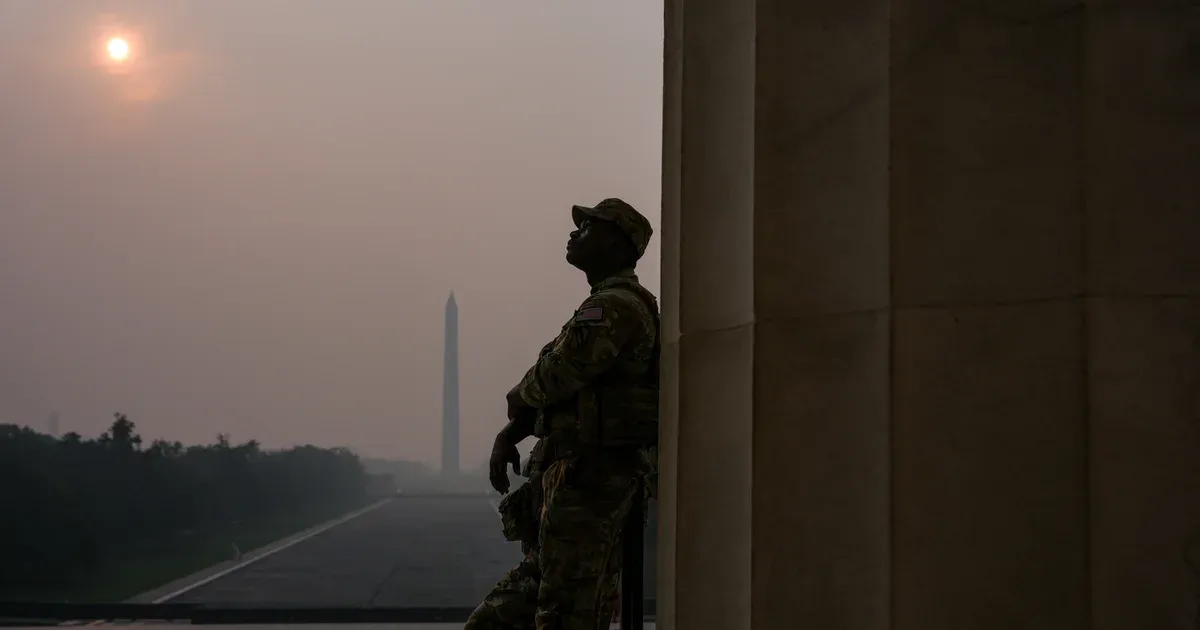
Wildfire smoke covered a broad stretch of the United States, degrading air in major cities and forcing officials to change outdoor plans, distribute masks and warn vulnerable residents to stay inside.
The pollution moved through the Great Lakes, Northeast and Mid-Atlantic regions. On July 17, 2026, Washington's monuments faded behind an orange-gray veil, a Major League Baseball game in Cleveland was postponed, and unhealthy readings persisted from Minnesota through the East Coast overnight.
The plume came from hundreds of fires in Canada and active fires in Minnesota's Boundary Waters Canoe Area Wilderness. Forecasts offered periods of relief during weekend storms, but shifting winds meant that improvement in one city could coincide with worsening air farther east. The smoke can also travel above ground and descend hours later when atmospheric mixing changes, so a clear morning does not guarantee a clean afternoon.
A Smoke Corridor Covers Three US Regions
Detroit and communities in Minnesota, Illinois and Michigan registered among the world's worst air readings on Friday, according to monitoring data cited by the Associated Press. Washington followed close behind. In New York, conditions improved from unhealthy to moderate after a thick orange haze had partly hidden the Manhattan skyline a day earlier.
Smoke contains fine-particle pollution small enough to travel deep into the lungs and enter the bloodstream. Repeated exposure can aggravate asthma and other respiratory illness and is also associated with cardiovascular and neurological harm. Irritated eyes, coughing and shortness of breath can appear during shorter exposures, while high concentrations can affect healthy adults, not only people with diagnosed conditions. Particle levels can also remain elevated indoors when buildings draw outside air without adequate filtration.
Public-health guidance focused on children, older adults, pregnant people and residents with heart or lung disease. Officials advised those groups to reduce strenuous outdoor activity, keep windows closed when possible and use filtered indoor spaces until local readings declined. Portable air cleaners with a suitable particle filter can improve a single room when a central system is unavailable. Anyone experiencing chest pain, severe breathing difficulty or worsening symptoms needs medical advice rather than relying only on a mask or an app reading.
New York, New Jersey and Pennsylvania distributed K95 masks, canceled outdoor programs and opened libraries or other public buildings as cooling centers. Residents can use the federal Air Quality Index and AirNow's fire-and-smoke map to check local conditions before exercising, commuting or sending children outdoors. The index runs from green for good air through orange, red, purple and maroon as health risk increases; the color matters more than whether the sky looks clear from a window. Hourly readings can differ sharply within the same metropolitan area, especially near the moving edge of a plume.
Health Advisories Meet a Political Dispute
National Weather Service forecaster Bob Oravec said the fires would keep producing smoke even when weather briefly cleared individual cities:
“The source of the smoke is going to continue on for certainly a week, probably.”
The Ohio baseball postponement showed how quickly an air advisory can become an operational decision. The Guardians and Pirates planned a Saturday doubleheader, subject to conditions and another air-quality review. Organizers of Sunday's World Cup final in New Jersey were also watching the forecast; AP reported that winds were expected to improve the New York area's air by match day, without eliminating the need for monitoring before kickoff or during prolonged outdoor exertion.
President Donald Trump blamed Canadian forest management in a social-media post and threatened additional tariffs. Ontario Premier Doug Ford responded that Canada had previously helped the United States fight fires and said American officials should send support instead of complaints. The exchange turned a shared emergency into another trade dispute between the neighboring governments. Forest policy is divided among federal, provincial, Indigenous and local authorities, while tariffs would be collected on traded goods rather than directed automatically to fire crews.
About 190 fires were burning in northern Ontario, Ford said. Flames destroyed the Namaygoosisagagun First Nation community, and ten northern Ontario communities had been evacuated or were being evacuated. Minnesota officials, meanwhile, closed the Boundary Waters wilderness while crews fought fires there, confirming that significant smoke sources existed on both sides of the border. The closure also removed visitors from remote terrain where an evacuation would consume aircraft and personnel needed on active fire lines. Longer, hotter fire seasons associated with a warming climate increase the period in which distant cities can receive smoke from multiple regions at once.
Fire Control, Not Tariffs, Determines Exposure
Tariffs cannot redirect a plume or extinguish a remote fire. The near-term US response depends on accurate monitoring, clear workplace and school rules, access to filtered indoor air and cooperation with Canadian and state firefighting teams. A well-fitted respirator can reduce particle exposure outdoors, but ordinary face coverings do not provide the same filtration. Employers also need clear thresholds for moving outdoor work or sports inside instead of leaving every decision to individuals.
Wind will decide which city receives the next concentrated wave, but the duration rests on fire behavior and suppression. Forecasters can track the plume, health agencies can reduce exposure, and local governments can open cleaner-air spaces with effective heating and cooling filters. Lasting improvement requires crews and equipment at the fires producing the smoke, an effort that works faster when the two countries share aircraft, personnel, satellite detections, evacuation information, equipment locations and current fire data in real time.