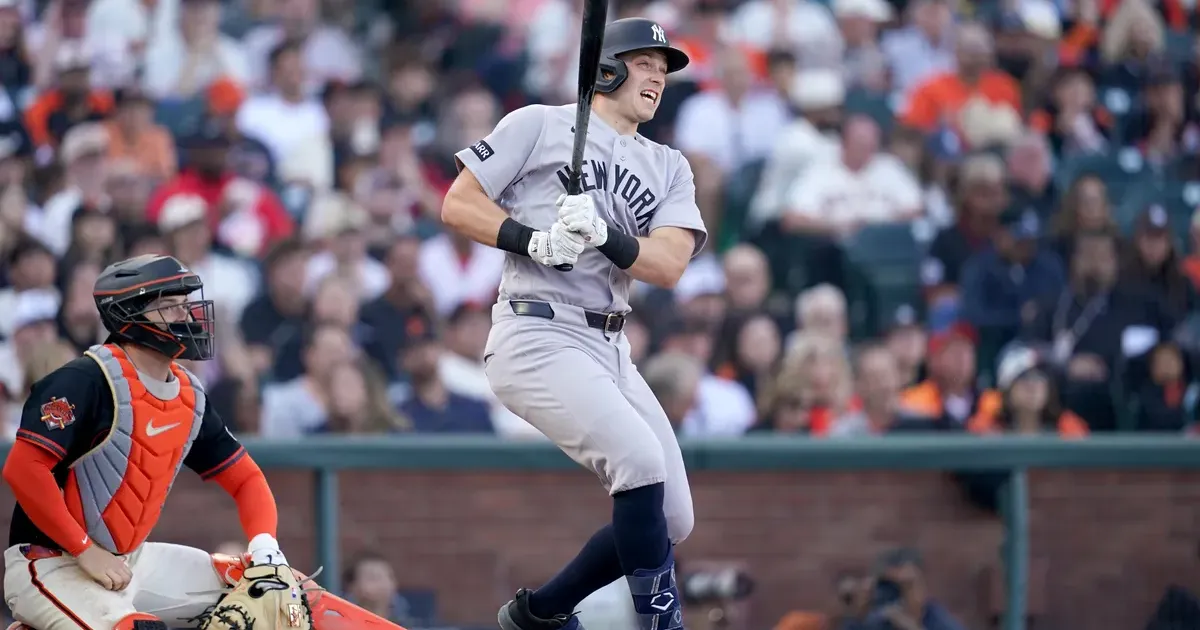
The New York Yankees opened the 2026 season by sweeping the San Francisco Giants, but the more revealing story was not generic pitching depth. It was how quickly San Francisco's offense turned into a crisis.
New York won 7-0 on Opening Night, followed with a 3-0 shutout and closed the series with a 3-1 win on March 28 at Oracle Park. The sweep left the Giants 0-3, gave Aaron Boone his 700th managerial win and forced San Francisco to explain why its first run of the season did not arrive until the third inning of the finale.
Opening series can be overread. One total run across three games is more difficult to wave away.
The Drought Framed the Sweep
The Giants opened with two shutout losses and only four hits across those games. Matt Chapman's RBI single in the third inning of the finale finally ended a 20-inning scoreless streak that matched a franchise mark dating to 1909. The crowd reaction felt closer to relief than celebration.
New manager Tony Vitello did not inherit an easy opening assignment. Facing the Yankees immediately puts every weak at-bat under a brighter light, and San Francisco's hitters did little to lower the volume. The Giants collected nine hits in the final game, but they still kept losing leverage moments.
A lineup can claim bad timing for one afternoon. Across an opening series, especially at home, it starts to look like a problem that needs a credible answer.
New York Won Without Needing a Parade
The Yankees deserve credit for forcing that pressure. Max Fried gave them the tone in the opener, and the staff kept the Giants from turning scattered contact into innings. New York did not need a home-run parade every night. It needed strikes, defense and bullpen order, and it got enough of each.
That is the kind of road sweep that travels well because it does not depend on one offensive shape. The Yankees could build early leads, protect margins and let San Francisco press. Once the Giants started chasing their first run, every quiet inning became heavier.
The sweep was not only about the Yankees playing with more discipline. It was about New York making the Giants play from discomfort for three straight games.
Judge and Rice Supplied the Difference
Aaron Judge homered for the second straight game in the finale, sending another ball toward left field and reminding Giants fans why his appearances in San Francisco carry extra sting. Ben Rice delivered the two-run double in the third inning against Tyler Mahle that put New York ahead.
Those swings were not cosmetic. In a series where the Giants could barely score, one clean extra-base hit changed the game state. San Francisco did not have enough offense to absorb even small mistakes.
The finale also carried an automated ball-strike subplot, with multiple plate-umpire calls challenged and overturned. That detail belongs in the story because it shows how the new system can reshape at-bats. It did not decide the series. The Giants' inability to finish rallies did.
The Ninth Inning Summed It Up
David Bednar closing the sweep after two singles in the ninth gave New York one last example of the gap between pressure and damage. San Francisco had a chance to make the final inning uncomfortable. Patrick Bailey grounded into the game-ending double play, and the series ended with the same message it had carried from the first night.
Three games do not define a season, but three games with one total run force a team to answer whether the problem is rust, personnel or the first sign of a summer-long offensive ceiling.
The Yankees left San Francisco with confirmation that their pitching, power and bullpen can travel. The Giants left with a batting order already being measured against history for the wrong reasons.