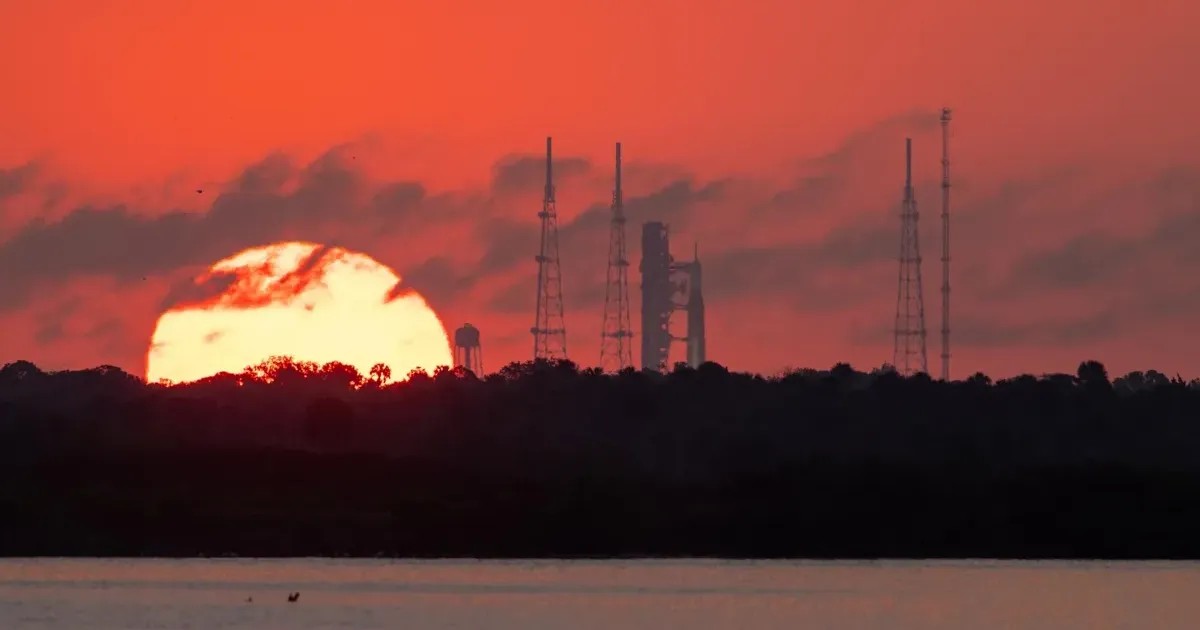
NASA's Artemis II story should now be written as a completed crewed lunar flyby, not as a launch countdown still waiting to prove itself.
The mission launched on April 1, 2026, and splashed down on April 10 after 9 days, 1 hour and 32 minutes in space. Its job was not to land on the Moon. Its job was to test whether Orion, the Space Launch System, mission control and recovery teams could send humans beyond low Earth orbit, carry them around the Moon and bring them home safely.
Late-March preparation reporting became incomplete once the mission ended. By July, the account had to include the verdict: Reid Wiseman, Victor Glover, Christina Koch and Jeremy Hansen flew aboard Orion, reached lunar-distance flight, and returned safely to the Pacific off San Diego.
The Mission Was a Human Systems Test
Artemis II put people inside hardware that had previously flown uncrewed on Artemis I. Orion had to support cabin pressure, power, navigation, communications and life-support operations across a deep-space profile. SLS had to deliver the launch energy. Mission control had to manage a flight path where small errors can become large problems quickly.
The crew also performed work that cannot be fully tested with an empty capsule. Manual handling, suit checks, communications, habitability, human-machine procedures and post-splashdown recovery all carry weight because future Artemis missions will place crews into more complex operations.
The headline number was striking: NASA said the crew traveled 252,756 miles from Earth at their farthest distance. The operational point was even clearer. Artemis II turned the question from “can NASA launch this crew?” to “can NASA make this architecture repeatable?”
The Crew Carried Symbolic Weight
The mission's symbolic value was real. Glover became the first Black astronaut assigned to a lunar mission, Koch the first woman assigned to a Moon-bound crew and Hansen the first non-American to fly beyond low Earth orbit. Those milestones drew public attention because Artemis is not only a hardware program. It is also NASA's attempt to build a post-Apollo lunar effort that looks different from Apollo.
But symbolism could not substitute for performance. The vehicle had to fly. The crew had to work the spacecraft. Mission control had to make the burns, communications windows, trajectory checks, reentry planning and recovery sequence behave as a single system.
The mission's success therefore carries more weight than its imagery alone. Representation helped explain why people watched. Execution gave the mission its operational value.
Recovery Was Part of the Test
Deep-space missions do not end when the capsule crosses back into the atmosphere. Reentry, splashdown, communications, crew extraction, medical checks and spacecraft recovery are part of the flight test. Artemis II proved that the return chain could function with humans inside the vehicle.
The Pacific recovery off San Diego also restored a familiar but demanding part of U.S. spaceflight: joint NASA and Navy operations at sea. The capsule had to be stabilized, the crew had to exit safely and Orion had to be brought back for inspection and data review.
Those details are less cinematic than a Moon flyby. They are also the details that determine whether a program becomes operational. A lunar architecture is only as strong as its least glamorous procedure.
Success Did Not End the Pressure
Artemis II gave NASA a needed win after years of delay, cost criticism and scrutiny of Orion's heat-shield performance after Artemis I. It also moved attention to the next question: how quickly can the program turn a successful flyby into a reliable sequence of later missions?
That pressure now sits on lander readiness, spacesuits, docking demonstrations, mission sequencing, budgets and political patience. NASA's next Artemis steps have to prove more than inspiration. They have to prove that Orion, SLS, commercial lander work, surface systems and recovery planning can become a dependable sequence rather than a spectacle.
The international context intensifies the pressure. China is advancing its own lunar plans, commercial contractors have schedules of their own, and Congress will keep asking whether the cost of Artemis matches the pace of results.
The Flyby Bought Credibility, Not a Blank Check
Artemis II bought NASA credibility, not time without scrutiny. The crew went farther than any humans had gone in decades and came home safely. That is a major achievement. It is not the same as a sustained lunar return.
The Moon is not won by a flyby. It is won by repeatable systems, boring reliability and a chain of missions that can survive budget fights, contractor delays and technical shocks. Artemis II proved the first human link in that chain.
The rest remains exposed. This does not diminish the crew or the flight. It is the correct standard for a program that wants to turn a successful lunar loop into a durable human presence beyond Earth orbit.