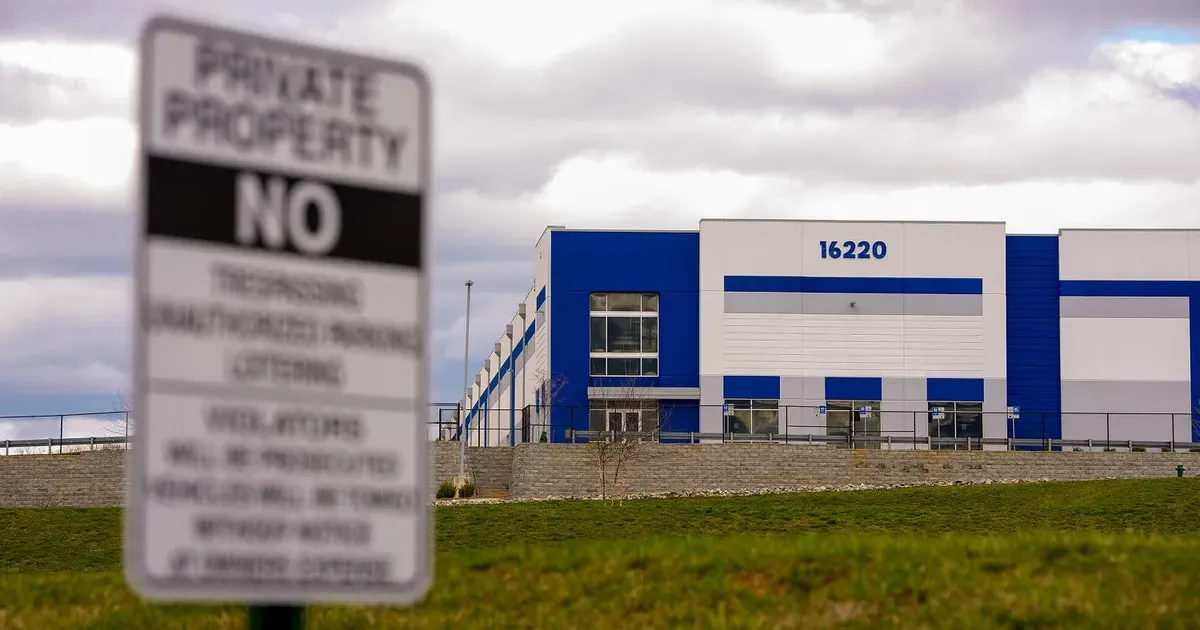
The Department of Homeland Security's pause on new warehouse purchases for immigrant detention was more than a procurement delay. It exposed the weakness in one of the fastest pieces of the Trump administration's detention expansion plan: buying or leasing industrial buildings and converting them into large-scale ICE facilities before local, legal and operational questions were settled.
The review covered contracts signed under former Homeland Security Secretary Kristi Noem and arrived after Markwayne Mullin took over the department. By then, the warehouse strategy had already become politically and legally expensive. Reports described an effort tied to a $38.3 billion detention buildout, a goal of roughly 92,000 beds and at least 11 warehouses acquired across eight states at a cost above $1 billion.
The Review Was Not a Full Retreat
DHS officials framed the pause as a contract review, not a permanent cancellation. The limited scope mattered. The department could still move forward with sites already acquired, renegotiate deals, sell some properties, lease others or redesign projects around smaller capacity.
But even a pause changed the momentum. The warehouse model depended on speed. Large industrial buildings offered square footage, loading access and highway proximity. Detention requires something more complicated: medical care, legal access, sanitation, sleeping space, recreation, fire safety, staffing, food service, transport, language services and independent oversight. Those requirements do not become easy because the building is big.
Local Opposition Became a Budget Problem
Several proposed sites drew resistance from residents, mayors, county officials, state attorneys general and local advocates. Some communities objected on moral grounds. Others focused on roads, water systems, fire response, sewer capacity, traffic, schools, hospitals and the lack of consultation before federal plans appeared.
Local opposition carried a financial cost. Lawsuits, stop-work orders, redesigns, public meetings and political pressure slow a project that was sold as rapid capacity. A cheap warehouse can become expensive when the government has to litigate environmental review, zoning questions, procurement records and emergency-service obligations.
The Contract Questions Were as Serious as the Policy
The contract review also reflected concern about how the Noem-era deals were made. Lawmakers and watchdogs questioned whether warehouse purchases and related detention contracts were competitive, properly valued and insulated from political influence. Later reporting about investigators examining Corey Lewandowski's possible role in DHS contracting made the procurement cloud darker.
The procurement issue matters because immigration detention is already a high-profit federal market for private operators, real-estate owners, food vendors, medical contractors and transportation companies. If the government is buying industrial property above market value or awarding work through weak competition, the detention expansion becomes not only a civil-liberties fight but a taxpayer-risk story.
ICE Still Needs Beds
The pause did not remove enforcement pressure. More arrests, stricter release policies and faster removal goals all require detention space. If warehouses are delayed or sold, ICE has to lean harder on existing detention centers, local jail contracts, temporary facilities or alternatives such as electronic monitoring and reporting programs.
None of those options is clean. Crowding worsens conditions inside existing facilities. Jail contracts create oversight and standards problems. Monitoring programs draw criticism from officials who say they do not guarantee court appearances. The warehouse pause shifted pressure across the system rather than ending it.
Warehouses Make Detention Look Easier Than It Is
The appeal of the model is obvious. A warehouse looks like ready capacity: walls, roof, square footage, parking and delivery access. But detention is not storage. People need medical assessment, mental-health care, access to lawyers, family contact, safe sleeping conditions, emergency exits and protection from abuse.
The shortcut breaks at that point. A building designed for goods can be retrofitted for people only if the government accepts cost, oversight and design obligations upfront. If those obligations are added after a political announcement, the facility becomes a lawsuit waiting for a detainee to prove the obvious.
The Physical System Limits the Slogan
The operational lesson is that detention policy cannot be built only from executive orders and press conferences. It needs buildings, nurses, guards, lawyers, judges, buses, food contracts, emergency services and local tolerance. When any of those pieces is missing, the result is delay, unsafe conditions or legal exposure.
DHS can restart purchases, sell unwanted sites or redesign the network. The central problem remains. Warehouse detention promised quick capacity without first proving that the government could run lawful, humane and locally accountable facilities at that scale. A locked building is easy to announce. Making it fit for people is the part that exposed the plan.