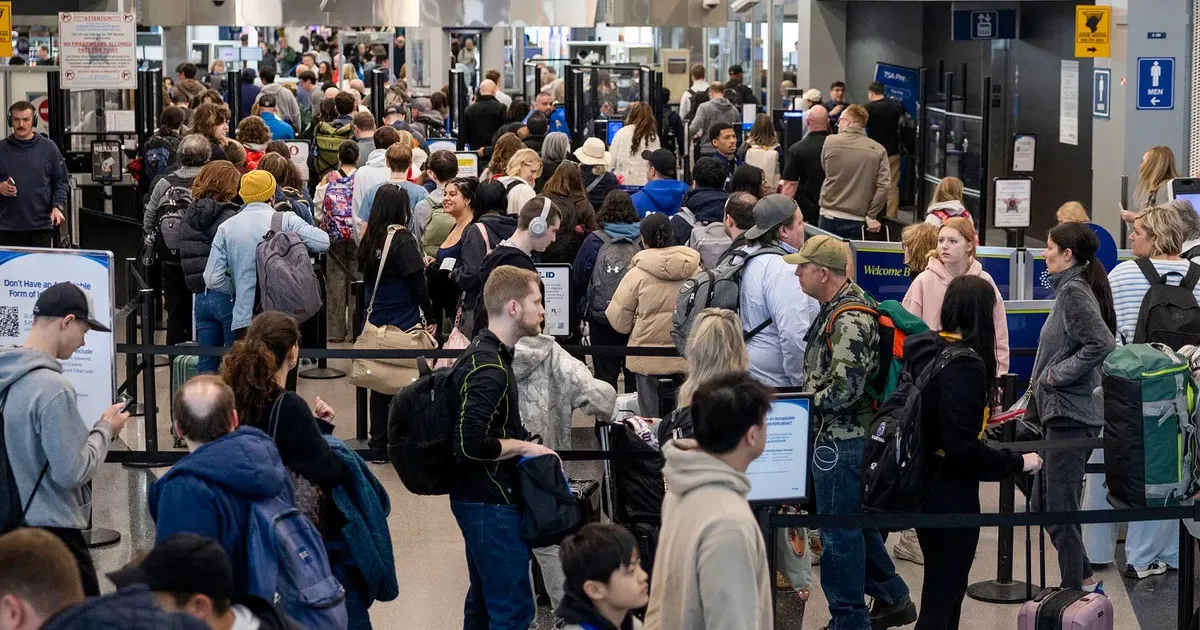
The 2026 Department of Homeland Security shutdown showed how quickly a funding fight can become a security problem. What began as a congressional dispute over immigration enforcement funding turned into weeks of delayed pay, airport staffing pressure, contractor uncertainty and public confusion over which parts of DHS could still function.
The shutdown ended on April 30, but the operational lesson did not end with the bill signing. DHS is not a single office that can pause cleanly. It is airport screening, emergency management, border processing, cyber support, Coast Guard activity, procurement, grants and law-enforcement administration. When Congress uses that system as leverage, the damage spreads unevenly and often out of sight.
The Fight Was About More Than Procedure
The standoff centred on whether DHS should be funded as a whole or whether money for ICE and Customs and Border Protection should be separated from other department functions. Democrats pushed for immigration-enforcement accountability and partial funding routes. Republicans argued that DHS should not be reopened in pieces and accused opponents of weakening border security.
That argument may be politically legitimate. The operational problem is that a department built to manage risk was forced to manage Congress's failure first. Essential employees kept working in many areas, but essential status does not pay rent, preserve morale or keep experienced workers from leaving.
Airports Made The Shutdown Visible
TSA workers became the public face of the shutdown because passengers could see the consequences. Guardian and other reporting in March described long security lines, rising callouts and hundreds of TSA officers quitting after missed pay. Houston and other major airports became examples of how quickly staffing stress can turn into travel disruption.
The deployment of ICE agents to assist at airports made the policy split more visible. ICE personnel were still funded through separate channels, while TSA screeners faced pay disruption. That contrast sharpened the political fight and created a practical question: if the same department has workers paid under different funding streams, what does operational unity mean during a shutdown?
Security Agencies Weaken Before They Stop
A shutdown does not have to close every checkpoint to make a security agency weaker. Training gets delayed. Hiring slows. Overtime becomes harder to sustain. Procurement staff lose time. Grant offices fall behind. Contractors hold teams in place without knowing when invoices will move.
Those are not dramatic images, but they are the machinery of readiness. DHS depends on routine continuity: systems maintained, credentials processed, cyber support available, airport staffing predictable, emergency-management reimbursements moving. A funding lapse turns that routine into improvisation.
Contractors Carry A Quiet Cost
Federal contractors often absorb uncertainty before the public notices it. A clean cancellation lets a company redeploy people and capital. A shutdown leaves vendors waiting: keep teams available, delay purchases, slow hiring, watch cash flow and hope the government reopens before the gap becomes unaffordable.
The cost reaches DHS because private companies support technology, facilities, cybersecurity, maintenance, logistics and specialized services. When they begin pricing political shutdown risk into future contracts, taxpayers eventually pay for the instability Congress created.
The ICE Split Complicated Accountability
The 2026 fight also showed how immigration politics can fracture a department's public legitimacy. Some parts of DHS were framed as core public safety functions that should be protected from the fight. Other parts, especially ICE and CBP, became the centre of demands for reform and oversight.
That split is not easily solved. Immigration enforcement carries real legal authority and real public controversy. But bundling airport security, emergency management and cyber operations into the same hostage negotiation expands the damage. It forces the public to experience a governance dispute as a service failure.
Ending The Shutdown Did Not Erase The Signal
When Congress finally moved to reopen DHS, the most visible crisis eased. Pay restarted, airport pressure began to normalize and agencies could begin clearing delayed work. But shutdowns leave records inside institutions. Employees remember missed pay. Contractors remember uncertainty. Managers remember which contingency plans failed.
That memory changes behavior. Agencies become more cautious. Workers seek more stable jobs. Vendors add risk premiums. Local partners hesitate to rely on federal timing. The department remains open, but confidence in the appropriations process is weaker.
Funding Became A Security Variable
The DHS shutdown turned budgeting into a security variable. Congress can and should argue over border policy, ICE oversight, asylum procedures, body cameras, detention rules and department priorities. Those are real policy fights. The mistake is pretending that a long funding lapse punishes only the other side.
It punishes the operating system. A short lapse is disruptive. A long shutdown teaches agencies to plan around political failure, and that is a dangerous habit for a department built to manage risk. DHS can survive a funding fight, but each one makes the security state a little more dependent on improvisation.