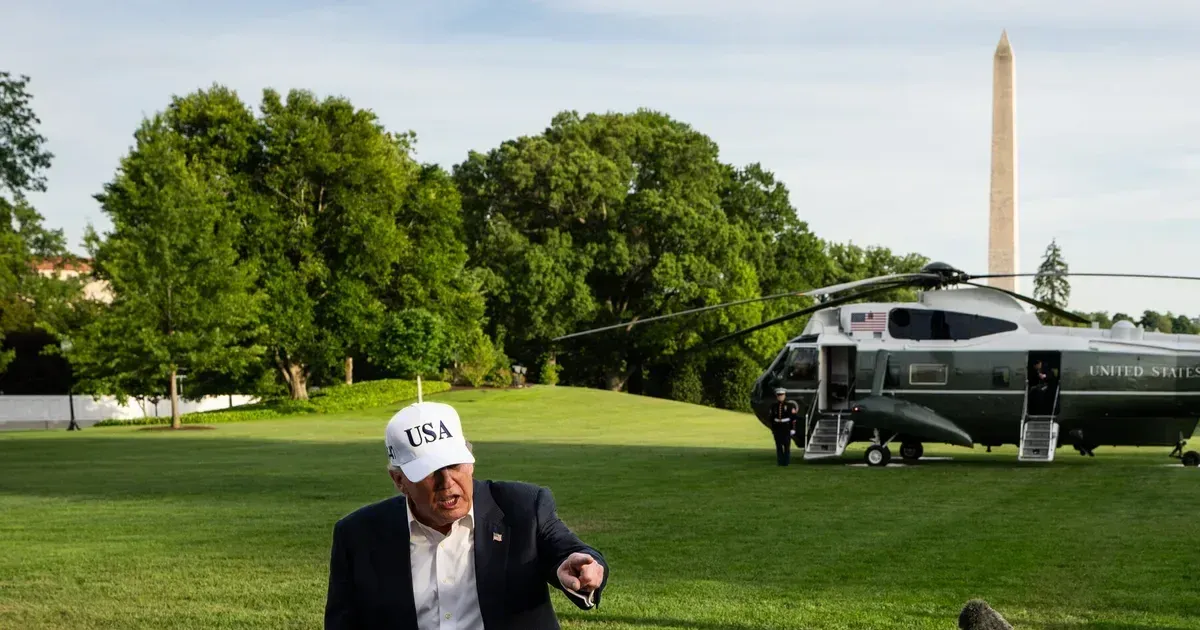
Fox News host Bret Baier challenged Donald Trump during a televised exchange regarding stalled military projections and plummeting public support. The conversation focused on discrepancies between the administration's early promises about the conflict in Iran and the current security situation. During the May 17, 2026, interview, Baier specifically pressed the president on previous assertions that military engagement with Tehran would be short-lived, a claim that contradicts the protracted nature of the current operation.
Public opinion appears to be shifting as these military commitments extend beyond their initial scope. Data cited during the broadcast indicates the president is struggling with his lowest approval ratings to date. This statistical decline coincides with a tightening of executive control over the Republican party infrastructure, creating a disconnect between primary-voter loyalty and general-election viability. Newsweek reported that the confrontation is a rare moment of direct accountability from a traditionally friendly media outlet.
Senator Bill Cassidy recently lost a critical primary contest in Louisiana, a result that analysts interpret as a victory for the president's inner circle. The removal of dissenting voices like Cassidy confirms a near-total alignment within the GOP. However, internal party dominance does not appear to translate to broader electorate confidence. Strategic planners now worry that the purge of moderate or independent-leaning figures will alienate the very voters needed to secure victory in the upcoming midterms.
The New York Times framed the Cassidy defeat as evidence of the president’s dominance inside the party, while noting that narrower views about Mr. Trump could become a Republican liability in the midterms.
Voters in suburban districts have expressed mounting concern over the economic and human costs of the Iran conflict. While the base remains energized by the president's aggressive posture, the lack of a clear exit strategy has become a primary talking point for opposition candidates. Baier’s line of questioning highlighted how the administration's initial rhetoric failed to account for the complexities of regional warfare. The president’s responses during the interview focused on past successes rather than providing updated timelines for troop withdrawals.
Cassidy Defeat Solidifies President's Control Over Party
Republican organizational leaders viewed the Louisiana primary as a test of the president's endorsement power. By defeating an incumbent like Cassidy, the administration has demonstrated that defiance of the executive branch carries a high political cost. This consolidation ensures that the legislative agenda remains strictly aligned with the White House through the end of the term. Party loyalty now surpasses traditional policy consistency as the primary metric for candidate survival.
Election records indicate that Donald Trump successfully mobilized rural turnout to displace the incumbent senator. The strategy relies on high-intensity messaging that often excludes the policy details favored by the party's older establishment. Critics of this approach argue that a party focused entirely on internal purity risks losing its ability to build broad coalitions. The resulting vacuum in the center of the political spectrum provides an opening for challengers to recruit disaffected conservative voters.
National polling averages currently show the administration trailing in key battleground states that were essential to previous victories. These figures reflect a growing dissatisfaction with the transparency of foreign policy decisions. Baier’s decision to highlight the "worst ever" approval numbers suggests that even media segments once considered reliable allies are recognizing the severity of the polling data. The president countered these points by dismissing the surveys as biased, a frequent defense that may have diminishing returns with the general public.
Media Confrontation Highlights Shifting Public Sentiment
The tension during the Fox News broadcast signaled a potential change in how conservative media interacts with the executive branch. Baier did not retreat from the topic of the Iran war duration, forcing a discussion on why the conflict has exceeded the predicted timeframe. The persistence marks a departure from standard interview formats that typically allow for more scripted responses. The exchange forced the administration to confront the disparity between its internal optimistic briefings and the reality documented by independent observers.
Conflict with Iran has strained the national budget and complicated diplomatic efforts with European allies. These external pressures are beginning to manifest as domestic political liabilities. Analysts note that the administration has yet to produce a thorough report detailing the total cost of the military engagement. Without such data, the public is left to judge the effort based on the rising numbers of casualties and the lack of visible progress on the ground.
Congressional Republicans find themselves in a difficult position as the midterms approach. They must choose between total alignment with a leader who commands the primary base and the need to appeal to a broader public that is increasingly skeptical of the war. The loss of Cassidy removes a voice of moderation from the Senate, but it also removes a buffer that once shielded the party from being defined solely by the president’s personality. The outcome of the next election cycle will likely depend on whether the party can overcome its historic reliance on a single figurehead.
Party Control Cannot Conceal the Political Cost of a Prolonged War
Will the current strategy of consolidating party power at the expense of public approval pay off? The Republican Party has essentially bet its future on the idea that a sufficiently motivated base can overcome a skeptical majority. The calculation assumes that the fervor of loyalists will outweigh the mathematical reality of declining approval ratings and a stalled foreign policy agenda. History suggests that political movements which prioritize internal purity over broad appeal often struggle during periods of national crisis or prolonged military engagement. By purging figures like Cassidy, the GOP has removed its own internal mechanisms for course correction.
The party is now closely tied to the success or failure of the Iran operation. If the conflict continues without a resolution, the very dominance that the president currently enjoys within his party could become the instrument of its eventual defeat at the polls.