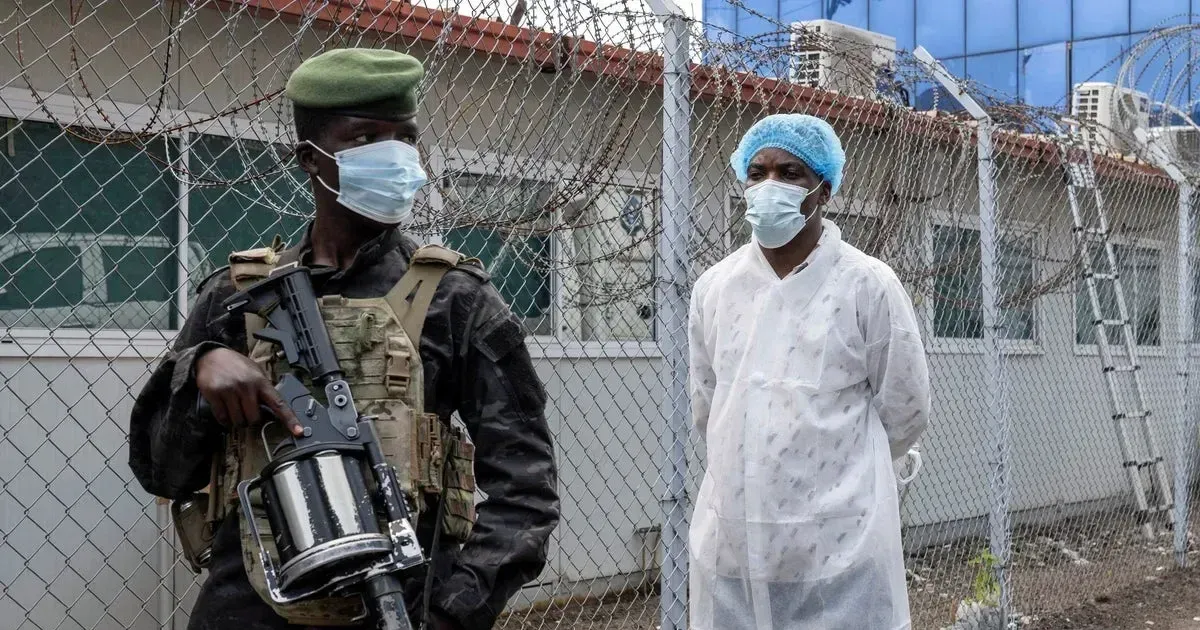
Ebola containment efforts are under severe strain in the Democratic Republic of Congo and Uganda as international health agencies warn that the response remains fragile. Data released on May 20, 2026, by the World Health Organization show a rapid escalation in suspected cases and suspected fatalities. Reported tallies now approach 600 suspected cases, marking a sharp rise from projections issued only seven days ago. Medical teams on the ground struggle to isolate patients while local infrastructure buckles under the weight of the surge.
Reports from the field indicate that 139 people have died from the hemorrhagic fever in recent weeks. World Health Organization officials cautioned that these numbers will likely increase as surveillance teams reach remote villages. Formal emergency protocols were activated earlier this month after the agency designated the situation an international health emergency. This designation enables faster resource allocation, yet the virus continues to outpace bureaucratic interventions.
Berlin Case and Regional Risk
American medical staff confirmed the transport of an infected doctor from the Democratic Republic of Congo to Europe for specialized care. A high-level biocontainment unit arrived at Berlin's Charité hospital to admit the patient under strict isolation protocols. This medical evacuation highlights the international complexity of the response, even as health agencies continue to describe global spread risk as lower than the danger inside the region. Specialized physicians in Germany are monitoring the patient's condition while coordinating with international partners on therapeutic responses.
Staff at the Berlin facility are using advanced life support systems and experimental treatments to manage the infection. Such transfers involve major logistical hurdles and require coordination between multiple national governments. While the patient receives top-tier care, health workers in the outbreak zone operate with a fraction of those resources. Differing standards of care remain a point of contention among aid organizations monitoring the spread. The situation remains fluid as more potential contacts are identified across multiple flight paths.
Evaluation of candidate vaccines and new treatments is currently the primary focus for health agency leadership. Health officials are examining whether any existing medical interventions can effectively rein in the transmission cycles. Preliminary data suggest that the current outbreak could be lengthy, requiring a sustained commitment of staff and capital. Success depends on the rapid deployment of these medical tools before the virus establishes a foothold in more densely populated urban centers.
Agency leaders are pessimistic about a quick resolution. This latest Ebola outbreak follows a smaller, earlier surge of cases reported in the region.
Resource Strain and Funding Gaps in DRC
Containment struggles are worsened by severe financial shifts that have left local clinics vulnerable. Health workers noted that the outbreak took weeks to confirm, a delay that allowed the virus to spread undetected through several communities. Clinics and regional health centers are already under immense strain due to existing patient loads and dilapidated equipment. London and Washington have implemented aid cuts that hit these facilities particularly hard during a critical window of the response.
Funding reductions from the United Kingdom and the United States have depleted the reserves needed for protective gear and mobile laboratories. Aid groups warn that these budgetary decisions are directly impacting the ability to conduct contact tracing and community outreach. Without adequate financing, medical teams cannot maintain the necessary presence in high-risk zones. The depletion of resources has created gaps in the surveillance net that the virus is now exploiting.
"It is very much not under control," according to health workers cited in reporting from the outbreak zone.
Local medical staff in the Democratic Republic of Congo are frequently the first and only line of defense against the fever. Many of these practitioners work in environments where basic supplies like clean water and gloves are in short supply. High-density living conditions and mobile populations further complicate the task of isolating the sick. If current funding paths persist, the gap between the speeds of the virus and the capacity of the response will widen. Viral spread continues to bypass the thin perimeter of medical checkpoints established in the initial weeks of the emergency.
Global Health Security Test
Can global health security survive a retrenchment of Western aid during an active viral surge? Current evidence suggests the system is under severe pressure. The decision by major Western powers to scale back health financing precisely when a highly contagious pathogen is accelerating creates a vacuum that no local agency can fill. The crisis extends beyond medicine to a breakdown of the institutional safeguards meant to prevent regional events from becoming global catastrophes. When the time to confirm an outbreak is measured in weeks rather than days, the window for containment effectively closes before the first siren sounds.
Furthermore, the transport of patients to premier facilities in Europe highlights the disparity in global preparedness. While Charité hospital can provide world-class isolation, the source region lacks the basic tools to prevent the next dozen cases. Security in the modern age depends as much on the robustness of a rural clinic in Central Africa as it does on the borders of a European capital. Without a reversal of aid cuts and a surge in laboratory capacity, the current trajectory points toward a wider and more durable outbreak zone. The cost of inaction will eventually dwarf the savings found in recent budget cycles.