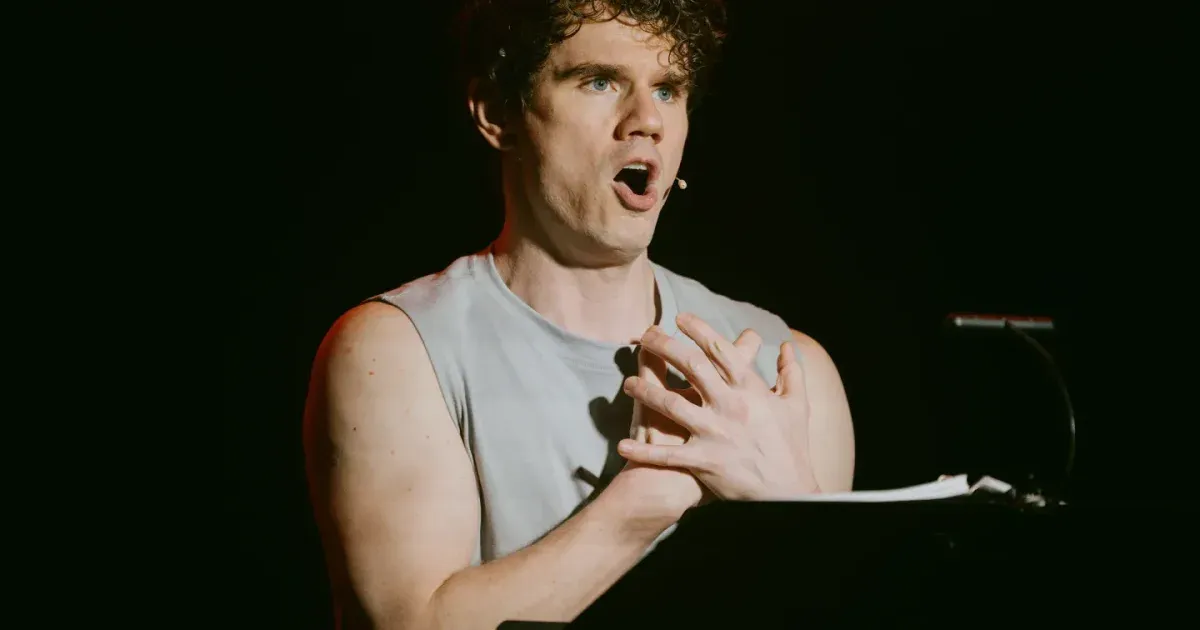
Dylan MarcAurele's Heated Rivalry: The Unauthorized Musical Parody shows how quickly online fandom can turn into live performance when the source material already has characters, jokes, longing, memes and a shared emotional vocabulary. What began as a queer hockey romance obsession around Shane Hollander and Ilya Rozanov has become more than a stream of posts. It has become ticketed theater, merch, travel plans and competing parody projects.
The speed is the story. Heated Rivalry did not need decades of nostalgia before it became stage material. It needed a fan base fluent in the romance, a creator who understood the joke without sneering at it and a theater model small enough to move at internet pace. Recognition opened the room. Craft still has to keep people there.
MarcAurele Knows the Affection Under the Joke
MarcAurele is well suited to this kind of parody because the form needs affection as much as mockery. Heated Rivalry gives him obvious comic fuel: elite hockey masculinity, secret desire, rivalry-as-flirtation, melodramatic longing and fans who can quote the emotional beats before the first song starts. The weak version would simply point and laugh. The stronger version plays the feelings loudly enough that the joke lands without cheapening the attachment.
The balance is essential in fandom theater. Audiences do not only want references. They want proof that the creators understand why people care. A parody that sneers at the romance loses the room. A parody that treats every fan response as sacred becomes inert. The useful space is in between: sincere enough to honor the obsession, shameless enough to make it theatrical.
Off-Broadway Proved the Audience Would Show Up
The New York run gave the project a stronger signal than viral enthusiasm. Online excitement is easy to express. Buying a ticket, arranging a night out and returning with friends are different commitments. Heated Rivalry: The Unauthorized Musical Parody began previews in May 2026 at The Club's 6th Floor Theater, with MarcAurele writing book, music and lyrics and Alan Kliffer directing. Reports of quick sellouts and extensions showed producers that the fandom was not only loud; it could gather in a room.
The gathered audience matters for theater economics. New musicals are expensive and slow. A small unauthorized parody can move faster because the audience is partly organized before the first marketing push. The fan base is already explaining the premise, sharing clips and turning attendance into group behavior.
The Fringe Wave Changed It From Show to Phenomenon
By July, the story had widened. Multiple Heated Rivalry-inspired parody musicals were headed to or circling the Edinburgh Fringe ecosystem, including projects with different comic angles and queer performance traditions. The proliferation could look absurd from the outside. Inside fandom culture, it makes sense. Once a story becomes a shared language, creators start building side rooms, drag versions, cabaret riffs and local mutations.
The risk is saturation. If every project chases the same jokes, the wave burns out quickly. But the upside is that the fandom becomes a live circuit rather than a single production. People can compare versions, argue over choices and treat the parody boom as part of the fun. That is not how traditional adaptation usually works. It is closer to a theatrical group chat with ticket sales attached.
Merchandise Extends the Belonging
The commercial layer matters too. Heated Rivalry fandom already had the habits that help merch move: favorite lines, character loyalties, inside jokes and a desire for physical proof of membership. Candles, shirts, programs, specialty objects and themed drops can work when they feel specific to the story rather than pasted onto it.
The commerce line is easy to cross. Fans will support products that feel playful and intimate. They turn colder when they sense that a brand has mistaken affection for automatic spending. The commerce has to respect the joke. A fan object should feel like a wink from inside the room, not a receipt with lore printed on it.
Fandom Can Sell the First Ticket
The durability test is whether the show works for someone who knows the broad premise but misses half the references. If it does, the parody can travel beyond core fans. If it does not, it remains a live inside joke with a short shelf life. That is not a moral failure, but it is a ceiling.
Heated Rivalry gives MarcAurele and the other parody creators heat, vocabulary and willing listeners. It does not solve pacing, song structure, staging or comic escalation. The internet can fill the first room. Theater has to justify the second visit. The best outcome is not that fandom replaces craft. It is that fandom gives craft a faster, stranger and more emotionally loaded place to begin.