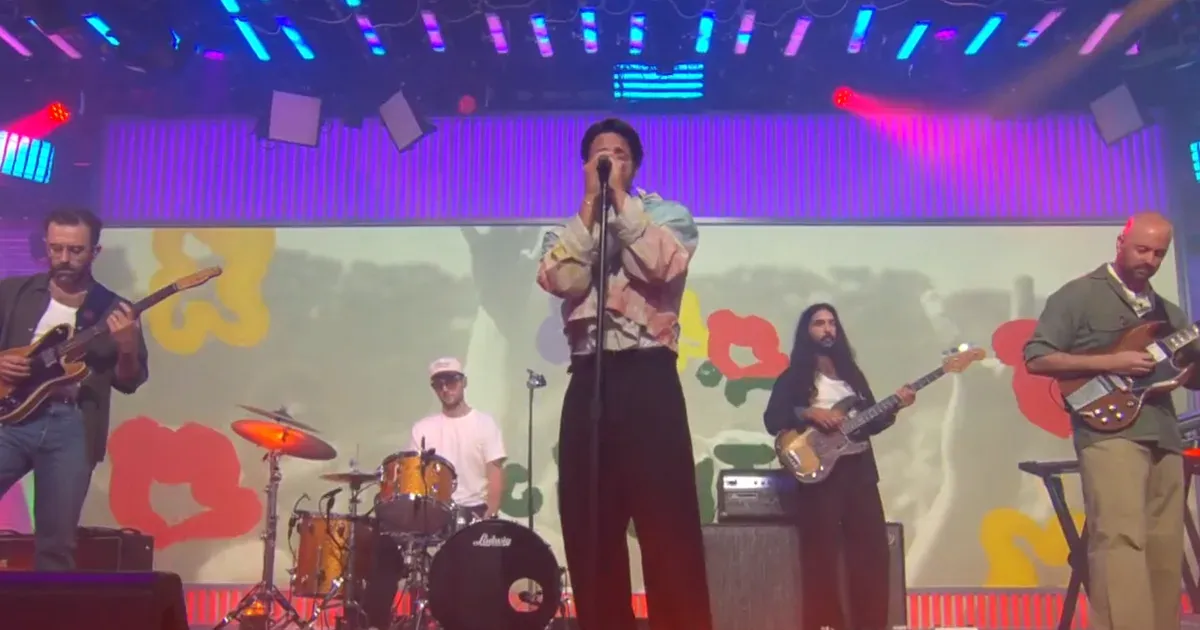
Young the Giant used a CBS Saturday Sessions appearance to put its current album cycle back in front of a national television audience. It was a compact television slot, but it carried the kind of performance-first exposure that still matters for a veteran alternative-rock act trying to keep a new record in public view. The performance slot carried more weight because catalog songs can find new audiences on television. It also gave the band a controlled setting rather than a festival stage. The performance aired on June 13, 2026.
The Irvine, California, group has been a durable presence since its self-titled debut arrived in 2010. Songs such as "My Body" and "Cough Syrup" made the band a commercial-radio name, while later records helped it keep a touring audience after the early 2010s alternative boom cooled. That long arc is why a short morning-show performance can still function as more than routine promotion.
The CBS segment centered on live execution rather than announcement-heavy promotion. Sameer Gadhia led the group through a studio set built around clean vocals, guitar texture and a controlled television mix, giving viewers a direct look at how the band's current stage sound fits the broadcast format. The performance setting also put the full band in frame, which matters for a group whose identity has always rested on ensemble dynamics rather than a solo-frontman image.
Victory Garden Meets the Catalog
The appearance included "Evergreen," a song connected to the band's Victory Garden era. The track gave the broadcast a current hook without forcing the set to ignore older listeners who know the group through its earlier singles. That is a sensible balance for a band promoting new material while still carrying a recognizable back catalog.
CBS also featured "Mind Over Matter," the title track from the band's 2014 album. That choice matters because the song remains one of the clearest bridges between the group's early alternative-radio identity and its more polished later sound. It also gave the set a familiar midpoint for viewers who may not yet know the newest album.
The band's streaming footprint still gives those older songs weight. "My Body" and "Cough Syrup" have remained visible on digital platforms, and the pair is often cited as evidence that Young the Giant's audience did not disappear after its first wave of mainstream attention. The television appearance leaned into that continuity rather than pretending the group is starting from zero. For viewers encountering the band through CBS rather than a streaming playlist, the set also explained why the older songs still travel with the new material.
Why the Television Slot Matters
Saturday Sessions is a useful format for a band in this position. It gives viewers a performance-first introduction rather than a short promotional interview, which helps a rock act show whether its studio sound still works live. For a group with layered guitar parts and a melodic lead vocal, that distinction is not cosmetic. A clean live take can do more for credibility than a standard rollout paragraph because it lets the arrangement carry the argument.
For Young the Giant, the value is continuity. The group can point to more than a decade of familiar songs while still asking listeners to follow the newer Victory Garden album cycle. That is the commercial challenge for many alternative bands that broke through before streaming fully reshaped music discovery. The band has to sound current without erasing the songs that made casual listeners recognize the name.
That balance is the real story of the appearance. The performance was not a reinvention; it was a reminder that the band has enough recognizable catalog material to support a new record without depending on nostalgia alone. In a crowded release environment, that kind of steady visibility can matter as much as a splashier announcement. The performance gives the album cycle another public marker while keeping the focus on musicianship rather than spectacle.
The slot also avoids the trap of treating the band as a one-era act. By placing current material beside a mid-career favorite, the broadcast framed Young the Giant as a working rock group with an active release cycle, not just a playlist memory from the 2010s. That framing is modest, but it is the point of the segment.