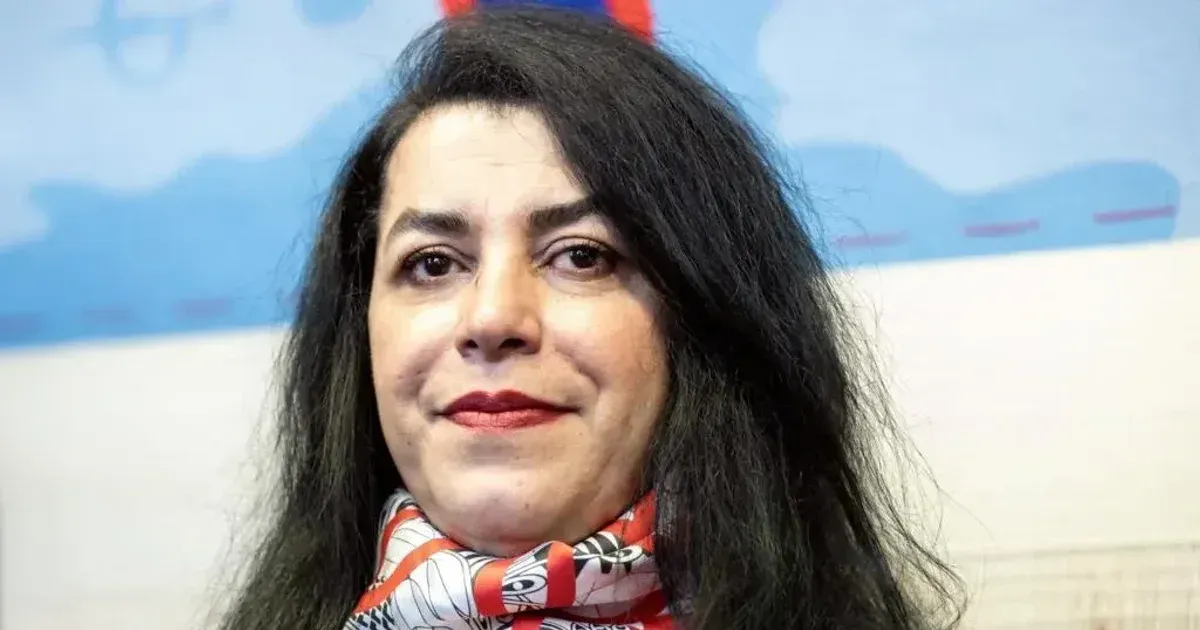
Marjane Satrapi, the French-Iranian illustrator and filmmaker who transformed the graphic novel medium with her memoir Persepolis, has died. Her death also reopens the cultural memory around exile, censorship and how Iranian history reached readers through comics. Her entourage confirmed her death in Paris on June 4, 2026. Sources close to the author described her passing as being caused by sadness, a touching reference to her mental and physical state since the loss of her husband just over a year ago.
Satrapi was 56 years old, and tributes began moving quickly across the French cultural world.
International acclaim reached Satrapi in 2003 when the English translation of Persepolis arrived in bookstores. Readers encountered an autobiographical narrative that provided a visceral window into the Iranian experience. The work stood apart because it did not explain Iran through policy jargon or distant diplomatic language; it used childhood memory, family arguments and visual restraint to make political upheaval feel immediate. It humanized a population often caricatured in Western media by focusing on the daily lives, rebellious acts, and quiet tragedies of a family navigating the collapse of one regime and the rise of another.
Persepolis and the Islamic Revolution
Born in Rasht, Iran, Satrapi grew up in Tehran during the height of the Islamic Revolution. Her work depicted the 1979 upheaval from the perspective of a young, outspoken girl. These stories captured the transition from the secular rule of the Shah to the restrictive atmosphere of the new republic. The narrative detail allowed global audiences to understand the Iran-Iraq War through the lens of domestic disruption and the loss of childhood innocence.
Stark black-and-white illustrations defined the visual language of her memoir. These drawings bypassed complex realism to focus on the emotional truth of the characters. Success for the books led to a broader movement in literature where graphic storytelling gained acceptance as a serious vehicle for historical and political analysis. The publication of these volumes brought Iranian history to millions of households across Europe and the United States.
Her work helped millions of readers relate to Iranians through the intimate story of a girl coming of age in a time of war.
Critics frequently noted her ability to blend humor with deep grief. Even as she depicted the horrors of state-sanctioned violence or the fear of secret police, Satrapi maintained a satirical edge that mocked the absurdity of fundamentalism. Life in exile became a central theme of her later work. After moving to France in the 1990s, she continued to explore the complexities of the Iranian diaspora and the feeling of existing between two cultures.
The Global Reach of Satrapi
Transitioning from the page to the screen, Satrapi co-directed the 2007 animated adaptation of her masterpiece. The film won the Jury Prize at the Cannes Film Festival and earned an Academy Award nomination. This cinematic success solidified her status as a major voice in world cinema. It also brought her memoir to viewers who had never encountered graphic literature, expanding the audience for a story that was already central to classroom and book-club discussions. She later directed live-action projects like Chicken with Plums and Radioactive, though Persepolis remained the work most closely associated with her legacy.
Entourage members indicated that the death of her husband in 2025 took a severe toll on her well-being. She had largely withdrawn from the public eye during the last year of her life. These accounts suggest she never fully recovered from the personal tragedy, leading to the description of her death as one stemming from heartbreak. Satrapi lived her final decades in Paris, where she was a celebrated figure in the French-Iranian intellectual community. She had settled in France in the 1990s and later became a French citizen, deepening the dual cultural identity that shaped much of her public voice.
Her impact on the graphic novel genre is difficult to overstate. Prior to the success of her memoir, comic art was often relegated to niche categories or children’s literature. Satrapi proved that the combination of simple imagery and sophisticated political commentary could capture the attention of the global academic and literary establishment. She leaves behind a body of work that continues to be taught in universities as a primary text on Middle Eastern history.
Legacy Beyond Persepolis
The death of Satrapi marks the loss of an essential bridge between the Iranian experience and the Western world. At a time when geopolitical tensions often obscure the humanity of civilian populations, her work functioned as a persistent counter-narrative to state propaganda. She did not just write history; she gave it a face, a voice, and a sense of humor that broke through cultural barriers. How future generations interpret the 1979 revolution will likely be shaped by the ink-and-wash memories she left behind. Her legacy suggests that the most effective way to challenge institutional power is through the unapologetic telling of one's own story. Satrapi showed that the personal is always political.