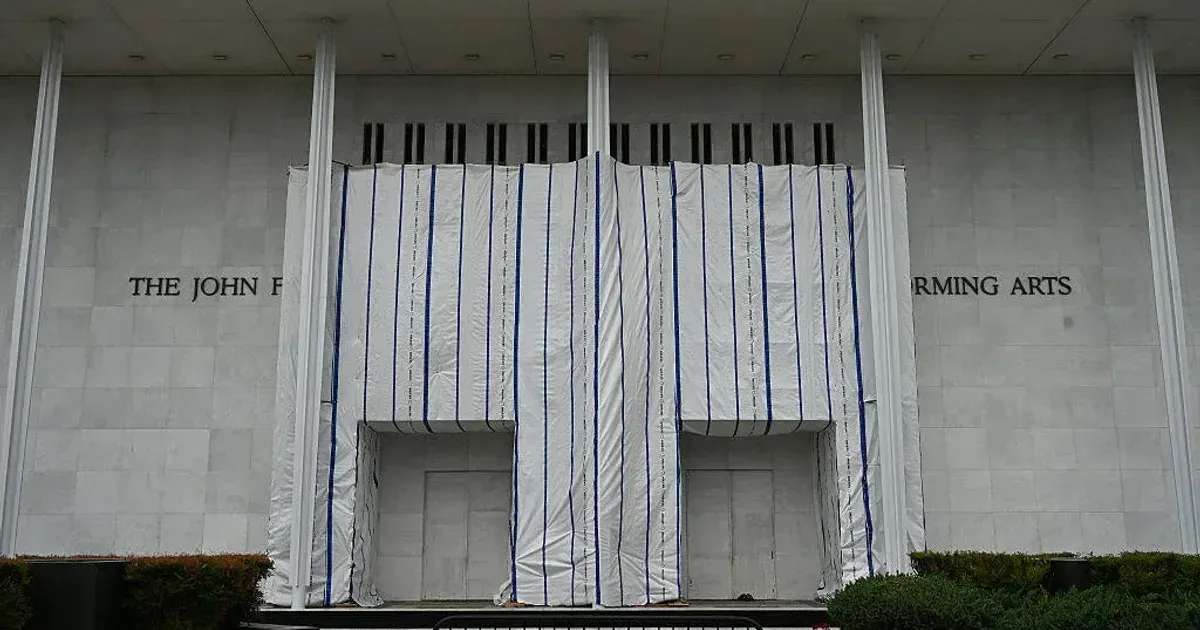
The Kennedy Center says it is still weighing whether to pursue a partial closure, keeping a major Washington arts dispute alive after a federal judge blocked a planned two-year shutdown. The fight has moved from whether the building can close entirely to what staying open actually means. That narrower question could prove just as consequential, because an arts center can be physically accessible while its stages, calendars and institutional relationships remain effectively paused.
The center laid out its position in a court filing dated June 20, 2026. CBS News and AP reported that management is considering options including partial, phased or other renovation approaches after the judge's order disrupted the original closure plan.
The Kennedy Center dispute began with renovation and governance decisions that drew legal scrutiny, including the attempted Trump naming changes and a board-backed shutdown plan. A federal judge blocked the two-year closure and ordered parts of the rebranding reversed. The ruling left room for necessary repairs, but it also signaled that governance decisions around the building could not simply be treated as internal management choices.
Open Access Does Not Settle Programming
The most important question now is whether the Kennedy Center will operate as a functioning performing arts venue or merely keep portions of the building accessible. Courts can define the legal boundary, but the cultural damage happens in the calendar: canceled productions, uncertain seasons and organizations that cannot wait indefinitely for a venue to decide what it is offering. That distinction matters for artists, audiences, employees and booked productions. A partially open building may still leave performers without dates, workers without stable schedules and patrons without a clear sense of whether promised cultural programming will return.
AP reported that the center said it is not required to reschedule canceled shows or book new programming while it evaluates renovation options. The Washington Post reported that the center says it will stay open for now but is not booking new shows.
The legal fight is no longer only about doors being open; it is about whether the institution is still doing the work the doors are meant to serve.
That is why Representative Joyce Beatty, who challenged the board actions, has argued that the center is not fully complying with the spirit of the judge's order. Her concern is that limited access could create a practical shutdown without using the same label.
Renovation Plans Remain Politically Charged
Major cultural institutions often need disruptive repairs. The Kennedy Center is no exception. But the renovation debate has become inseparable from the governance fight that surrounded the closure vote and the Trump-related naming decisions.
Partial closure may prove easier to defend than a full shutdown, especially if it lets necessary work continue while preserving some programming. It will still require credible details about timing, cost, public access and which stages or spaces remain usable. Without those details, partial closure becomes a phrase that can mean anything from targeted repairs to a broad programming freeze.
The center's board is expected to revisit the issue, and any plan that sharply limits performances will likely face renewed legal and political pressure. The closer a partial closure looks to the blocked full closure, the more opponents will argue that the same result is being recreated through a narrower administrative route. A phased approach can look practical if transparent, or evasive if it leaves audiences with an institution open mostly on paper.
The Institution Needs a Clear Public Answer
The Kennedy Center's problem is not only construction logistics. It is institutional trust. Audiences and artists need to know whether seasons can be planned, whether canceled shows are gone for good and whether future bookings are being frozen.
That uncertainty has costs even before any wall is repaired. Touring productions, resident companies, staff schedules and donors all depend on clarity. Cultural calendars are built months in advance, and hesitation can become its own form of disruption. The next credible step is a specific operating plan that separates necessary repairs from avoidable shutdown effects. Without that, the center risks winning a narrow procedural argument while losing confidence from the public it is supposed to serve. The institution needs a plan that performers can schedule around and audiences can understand, not another filing that leaves the practical calendar in doubt.