House Republicans' rejection of the Senate's March deal to fund most of the Department of Homeland Security did not create the DHS shutdown by itself. The standoff had already been running since February 14. But the House decision made the shutdown last longer, deepened the strain on workers and showed how far immigration politics had pulled the department away from ordinary appropriations.
The timeline is important. The Senate moved toward a compromise that would reopen much of DHS while leaving the most contested immigration-enforcement pieces for a separate fight. House leaders refused to take that path and instead pursued their own short-term measure. The Senate did not accept it. The shutdown continued until April 30, when Congress eventually moved a funding bill and Trump signed it.
The Senate Deal Was An Off-Ramp
The Senate compromise mattered because it offered a way to separate the operational department from the ICE and Border Patrol fight. The compromise was not a perfect solution. It left immigration enforcement funding for another vehicle, including reconciliation-style party-line maneuvering. But it would have restored funding for large parts of DHS that were already being dragged through a dispute they did not control.
For workers, the distinction was practical rather than procedural. A bill that reopened most of DHS meant pay, planning and operations could restart. A rejected deal meant more days of uncertainty. The House's argument was that DHS should not be split from border enforcement. The cost of that position fell first on employees who had no vote in the bargaining strategy.
TSA Pay Was A Patch, Not A Resolution
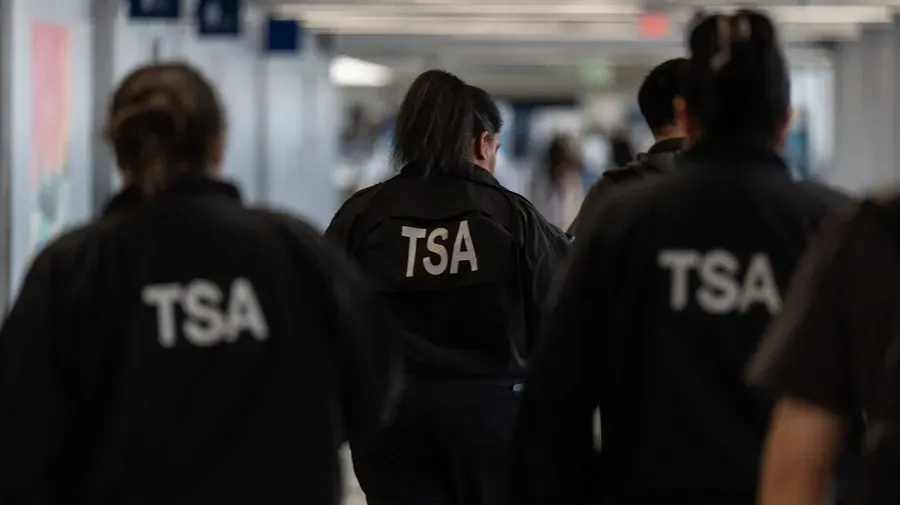
Trump's action to resume TSA pay reduced the most visible pressure at airports. It also showed why emergency patches are not the same as appropriations. Paying one category of workers can ease lines, callouts and public anger. It does not restore the full department's budget, procurement, training, support offices or long-term planning.
The limits of the patch were easy to miss because airport disruption is what most travelers saw. Long lines and unpaid screeners made the shutdown tangible. But DHS is larger than TSA. FEMA, cybersecurity offices, administrative staff, Coast Guard-linked operations, procurement teams and other support functions all depend on stable funding. A pay fix for one public-facing workforce did not repair the operating system around it.
The Fight Was About Immigration Leverage
The March rupture was really about whether Congress would fund DHS while postponing the fight over immigration enforcement. Democrats wanted reforms and limits connected to ICE and CBP after controversies over federal enforcement. Republicans argued that separating immigration enforcement from the rest of DHS weakened the department's core mission and rewarded obstruction.
Both sides framed the other as responsible for using workers as leverage. The result was that workers became leverage either way. A security department remained unfunded because Congress could not agree on whether border and immigration policy should be settled inside the same bill. The resulting use of workers as leverage is the structural failure the March rejection made visible.
House-Senate GOP Divisions Mattered
The episode also exposed Republican divisions. Senate leaders were willing to accept an off-ramp that funded most of DHS and pushed harder immigration questions into a separate lane. House Republicans, under pressure from their right flank, wanted a different approach. Speaker Mike Johnson had to manage a narrow majority and members who saw any partial deal as surrender.
The internal split gave the shutdown a strange shape. It was not simply one party blocking the other. It was also one chamber's Republican leadership refusing the other chamber's workable compromise. In a shutdown, that difference matters less to unpaid workers than to historians, but it explains why the standoff lasted beyond the point where a route out already existed.
The April Ending Proved The Delay Was Costly
The shutdown eventually ended on April 30, after Congress moved legislation that reopened key parts of DHS while leaving some immigration-enforcement fights for later. The April ending did not erase the weeks before it. Back pay can restore wages on paper. It cannot undo missed bills, credit stress, delayed contracts, suspended programs or the message sent to essential workers.
The April resolution also made the March rejection look more consequential. Congress ultimately had to accept that the department could not remain trapped indefinitely while immigration funding was fought out elsewhere. The question is why that recognition had to wait through another stretch of disruption.
DHS Funding Cannot Be Seasonal Hostage-Taking
A department responsible for aviation security, disaster response, border operations, cyber work, emergency management and maritime security needs stable appropriations. Immigration policy is not immune from debate. It means the operating budget should not become the pressure valve every time Congress wants leverage.
The March rejection belongs in the record because it shows how a shutdown can continue even after an exit appears. Lawmakers can call that discipline, leverage or principle. Federal workers experience it as instability. The public experiences it later, through slower services, weaker morale and a government that treats essential security functions as bargaining inventory.