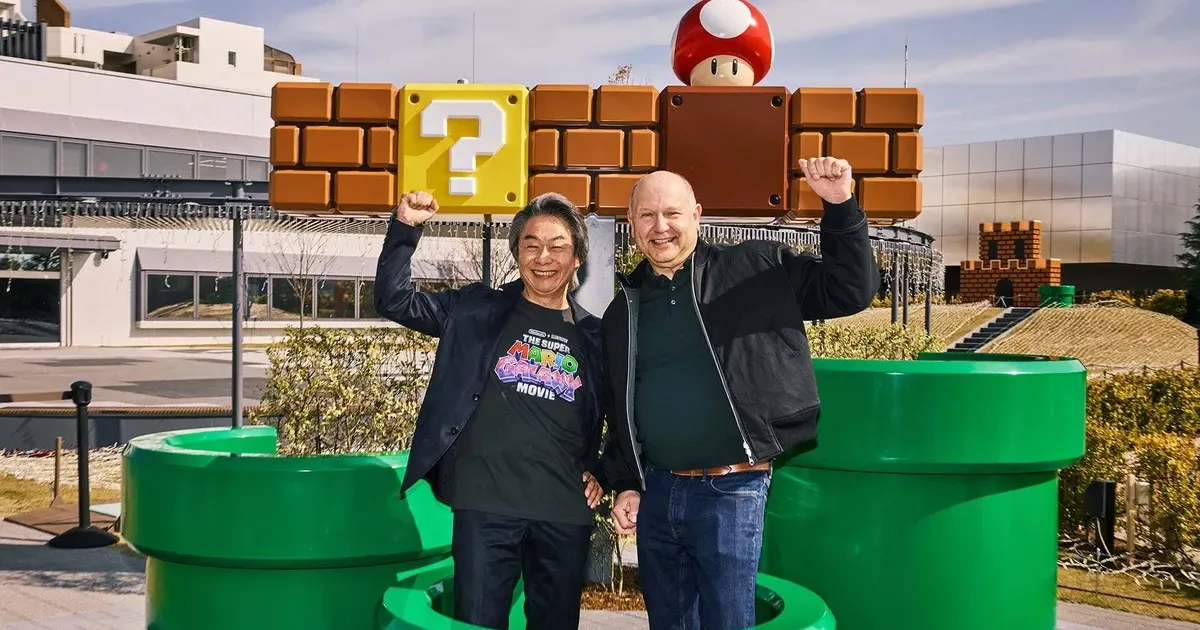
The Super Mario Galaxy Movie has moved beyond the question of whether audiences would show up. They did. The Nintendo-Illumination sequel crossed $1 billion worldwide despite mixed-to-negative reviews, confirming that Mario has become one of Hollywood's most reliable family-film engines. The remaining question is whether that commercial force is making the movies better, or simply making weaker storytelling easier to reward.
The sequel had obvious advantages: a beloved game title, a proven studio partnership, returning voices, spring-break timing, premium-format play and a parent-child audience trained by decades of Nintendo memory. It also had a richer creative challenge than the first film. Super Mario Galaxy is not just another map of pipes, castles and power-ups. The 2007 game carries scale, loneliness, gravity play, Lumas and Rosalina's unusually quiet sadness. That material asks for more than bright references.
The Box Office Overruled the Reviews
The opening weekend already showed the split. Critics complained about thin story, visual clutter and fan-service overload, while families gave the movie strong exit-poll support and bought tickets at a scale most studios would envy. By the time the global total crossed the billion-dollar line, the industry lesson was clear: Nintendo can survive reviews that would seriously damage a less durable brand.
The result does not mean reviews were irrelevant. They mark the difference between a hit and a film people keep defending after the hype fades. The first Mario movie proved that recognition could become a theatrical event. Galaxy proves the event can repeat. The third test will be whether repetition starts to feel like momentum or extraction.
Galaxy Gave the Film a Bigger Canvas
The Galaxy setting should have been a gift. Small planets, shifting gravity, star fields, Comet Observatory imagery and Luma mythology are naturally cinematic. They allow a Mario film to become stranger, softer and more spatially inventive than another tour through the Mushroom Kingdom.
But scale can also become noise. A film built from beloved locations can start to feel like a queue of images rather than a story. The best game references carry function: movement, danger, discovery or emotion. The weakest ones are trophies placed in the frame so viewers can recognize them. Galaxy had enough visual imagination to hold children in the room. It did not always give the story enough air to breathe.
Rosalina Shows the Adaptation Problem
Rosalina is the key test because she brings a different temperature into Mario. In the game, her story is tied to distance from home, loss, guardianship and cosmic patience. That is not heavy drama by adult-film standards, but it is unusually tender for this franchise. A film that reduces her to rescue mechanics or mythology delivery wastes the character's strongest quality.
Fan frustration therefore around character treatment is not just nitpicking. Viewers do not only want names and costumes. They want evidence that the filmmakers understand why a figure mattered. Nintendo's film universe will weaken if every beloved character becomes a collectible appearance instead of a role with weight.
The Franchise Has a Critic-Resistant Shield
Mario has spent forty years teaching audiences to enjoy repetition with variation. That is a powerful advantage on screen. Children want color, movement and familiar rhythms. Parents want a safe group outing. Longtime players want jokes, music cues and character arrivals. Critics may ask for narrative shape; the paying audience may ask for velocity and recognition.
The franchise shield is valuable, but it can become dangerous. When weak structure still produces a billion dollars, executives learn the easiest lesson first. More characters. More callbacks. More noise. Less patience. A critic-resistant franchise can become creatively lazy faster than a struggling one because the market keeps saying yes.
Nintendo Still Needs Movies, Not Catalogs
Nintendo's characters are not automatically films. They are game icons built around movement, challenge, timing and player control. Film removes the controller, so story has to provide the sense of purpose that gameplay once supplied. The audience cannot jump, steer or discover. It has to care.
The result shows that The Super Mario Galaxy Movie is both a victory and a warning. It proves Nintendo can fill theaters even when critics are unconvinced. It does not prove that Nintendo has solved adaptation. Spectacle brought the audience back. A stronger movie would make the world feel alive after the power star has been collected. If Nintendo wants a film universe with real durability, it has to stop treating story as the loading screen between references.