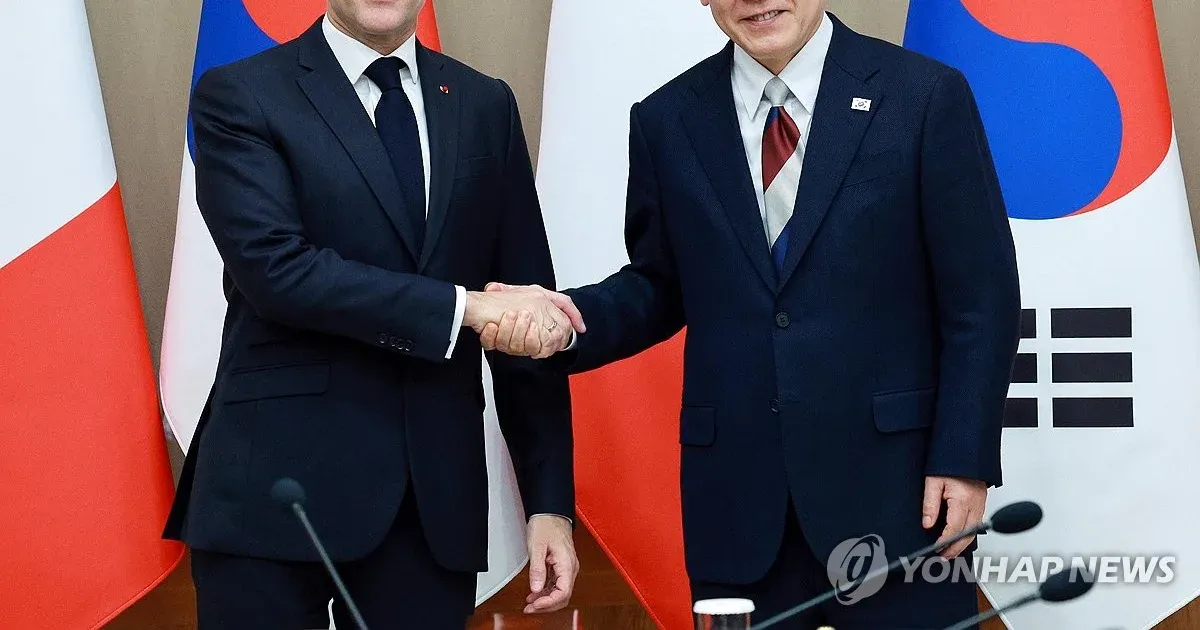
President Lee Jae Myung convened with French diplomatic representatives to establish a framework for ensuring the safe passage of commercial vessels through the Strait of Hormuz. Global energy stability depends on this narrow waterway, where recent disruptions have forced shipping conglomerates to reroute tankers around the Cape of Good Hope. Seoul and Paris agreed to coordinate naval resources to deter further interference with merchant shipping. Maritime security experts view this cooperation as a necessary step to stabilize soaring insurance premiums for liquefied natural gas carriers. The April 3, 2026, meeting raised hopes that maritime traffic could move through the strait again.
Hopes for a cessation of the maritime blockade triggered an immediate reaction in Asian financial centers. Investors moved back into riskier assets as rumors of a breakthrough in negotiations between regional powers began to circulate. South Korea, which relies on the Middle East for nearly 70 percent of its crude oil imports, faces severe economic contraction if the passage remains obstructed. Financial analysts in Seoul noted that the uncertainty had previously shaved hundreds of points off local indices. Energy security has become the primary driver of South Korean foreign policy in the current fiscal quarter.
Diplomatic Coordination Between Seoul and France
France maintains a substantial naval presence in the United Arab Emirates and has historically acted as a mediator in Persian Gulf tensions. President Lee Jae Myung emphasized that South Korea and France share a mutual interest in keeping global trade arteries open. Defense officials from both nations are currently discussing the possibility of joint patrols or shared intelligence gathering. The bilateral agreement avoids slower multilateral processes at the United Nations. French assets in the region provide a logistical backbone that South Korea’s Cheonghae Unit currently lacks.
"We will work closely with France to ensure the safety of our vessels and the stability of global energy supplies," President Lee Jae Myung said.
Logistical details regarding the naval cooperation are still under review by the Ministry of National Defense. French President Emmanuel Macron has reportedly signaled his support for a protective corridor for neutral shipping. Such a corridor would require serious minesweeping capabilities and constant aerial surveillance. South Korean shipbuilding firms, which produce the world’s most advanced tankers, have a vested interest in the success of these security measures. Diplomatic cables suggest that the two nations will present a unified front at the upcoming maritime security summit.
Seoul’s benchmark KOSPI index surged 72.87 points to close at 2,563.51 on Friday afternoon. The 2.92 percent jump is a sharp reversal after weeks of consistent selling pressure. Institutional investors led the buying spree, focusing heavily on technology and manufacturing stocks that depend on stable energy prices. Retail investors, who had previously fled to cash and gold, also participated in the rally. Trading volume spiked to 585.3 million shares as market participants scrambled to capitalize on the news of the Strait of Hormuz negotiations.
Market capitalization for the top ten firms on the exchange saw a collective increase of several billion dollars in a single session. Electronics giants and automotive manufacturers led the gains. These sectors are particularly sensitive to fluctuations in the cost of raw materials and shipping. Export-heavy industries view the potential reopening of the strait as a lifeline for their profit margins. Analysts at major brokerages cautioned that the rally hinges entirely on the successful implementation of the diplomatic agreement. Market volatility remains high despite the optimistic closing numbers.
South Korea’s currency gained serious ground against the greenback as the trading day progressed. The won strengthened by 8.3 units to end the session at 1,343.8 per U.S. dollar. Relief swept through the currency markets as the prospect of a prolonged energy crisis dimmed. A weaker dollar typically benefits South Korean importers who must purchase oil in the American currency. Currency traders cited the joint statement from Seoul and Paris as the primary catalyst for the won’s appreciation. The Bank of Korea had been intervening to support the won prior to this news.
Higher interest rates in the United States have put persistent pressure on the won throughout the year. Diplomatic progress provides a temporary buffer against external shocks. Foreign exchange reserves in South Korea have been depleted by recent attempts to stabilize the market. Traders now expect the won to test the 1,330 level if the Strait of Hormuz sees its first tanker transit without incident. Global oil prices also moderated slightly in response to the news. Energy-dependent nations are watching the situation with intense scrutiny.
Logistical Pressure on Maritime Trade Routes
Shipping companies have struggled with the logistical nightmare of avoiding the Persian Gulf. Rerouting vessels adds approximately 14 days to the journey between Asia and Europe. Fuel costs for these longer voyages have eaten into the quarterly earnings of major logistics firms. Port congestion in Busan and Ulsan has increased as schedules became unpredictable. Ships often arrive in clusters rather than at staggered intervals, overwhelming terminal capacity. Marine insurers have increased war-risk premiums by as much as 500 percent since the start of the blockade.
Vessels carrying South Korean exports to the European market must now weigh the risks of the Red Sea against the costs of the African route. Many firms have opted for the longer path to avoid potential missile strikes. The longer route has caused a shortage of available containers in some parts of Asia. Manufacturers are facing delays in receiving critical components for semiconductor production. The potential reopening of the Strait of Hormuz would ease these bottlenecks almost immediately. Port operators are preparing for a surge in traffic once the naval corridor is established.
Naval planners are currently mapping out the most efficient routes for escorted convoys. The convoy strategy would group tankers together under the protection of French and South Korean destroyers. Such an arrangement reduces the number of naval assets required to secure the waterway. Communication protocols between merchant ships and military vessels are being standardized. Recent history suggests that coordinated patrols are the most effective way to prevent non-state actors from harassing trade. The success of this mission will determine the price of gasoline in Seoul and Paris for the coming months.
Hormuz Optimism Still Needs Proof
Will a few French frigates and South Korean destroyers truly intimidate a regional power determined to weaponize the world’s most critical chokepoint? History suggests otherwise. The current optimism in the markets is a classic case of irrational exuberance, ignoring the reality that maritime security is not a matter of escorting ships but of political leverage. Seoul and Paris are playing a high-stakes game of bluff with an adversary that holds all the cards. If a single tanker is hit while under the protection of this new coalition, the resulting escalation would make the current blockade look like a minor inconvenience.
The KOSPI rally is built on the shifting sands of diplomatic hope, not on the hard foundation of a signed treaty.
Investors are betting on a swift resolution because they cannot afford the alternative. South Korea’s economy is a giant with feet of clay, entirely dependent on energy imports that travel through a 21-mile-wide stretch of water. By tying its security to French naval assets, Seoul is admitting that its own blue-water navy is insufficient for its survival. The reliance on a European power to secure Asian waters highlights a glaring hole in South Korea’s strategic autonomy. Expect the won to crater the moment the first escort mission meets resistance.
The markets have priced in a perfection that the geopolitical reality simply cannot deliver. Credibility is the decisive currency in the Strait of Hormuz, and currently, the Western-aligned powers are running a deficit.