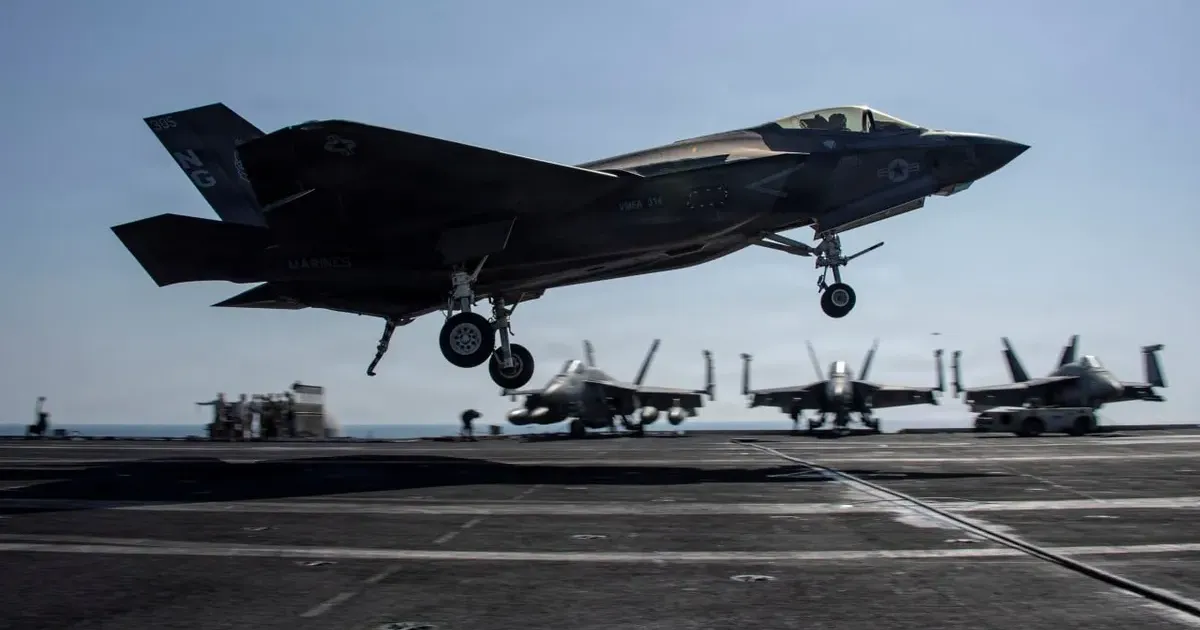
Iran's claim that it had downed a U.S. F-35 and Donald Trump's threat to target Iranian power plants and bridges required a clear separation between claims, evidence, threats and legal risk. In a fast-moving conflict, wording can escalate public fear before the record is settled.
The F-35 claim was especially sensitive because the aircraft carries enormous technological and symbolic value. Later reporting pointed instead to a U.S. F-15E being shot down, with crew-rescue details emerging and aviation experts identifying wreckage inconsistent with the original F-35 claim. The wider battlefield record remains complex, but the later evidence shows why the Iranian statement had to remain a claim until independent evidence caught up.
The aircraft claim needed proof
A state or military-linked source can announce a shootdown before wreckage, pilot status, U.S. acknowledgment, satellite imagery or credible third-party verification is available. During that window, the statement had to remain explicitly attributed to Iran because the claim still required evidence.
Once later information points to a different aircraft, the hierarchy of facts has to change. The original F-35 assertion becomes part of the information battle, not the verified account of the battlefield.
Infrastructure threats carry a separate danger
Trump's warning about power plants and bridges was not just tough language. Electricity systems, transport routes and related infrastructure can support hospitals, water treatment, evacuation, communications and ordinary civilian life. Threatening them immediately raises questions under international humanitarian law.
Some infrastructure can have military value in a specific context. The broad threat creates the problem. A lawful military target is not the same as a civilian grid, and a bridge used for military logistics is not the same as every bridge a population depends on.
Threats can move events before strikes
A public threat can alter diplomacy, allied statements, congressional oversight, oil prices, shipping insurance and Iran's own posture before a strike happens. The statement itself becomes part of the conflict environment.
Two distinctions matter at once. A threat is not an executed operation. It also cannot be dismissed as empty theater when governments, markets and armed groups may respond to it.
Markets do not verify military facts
Oil, shipping, insurance and defense stocks can react before facts settle. A disputed aircraft claim, tanker report, blocked route or infrastructure warning can move prices quickly. The market movement is real, but it is not proof that the underlying military claim is true.
Both layers can exist at the same time. A financial reaction may be measurable while the battlefield event remains disputed. Confusing those layers gives propaganda a market-shaped costume.
Attribution Separates Claims From Facts
The identity of each source changes the weight of each statement. Iranian officials claimed. U.S. officials confirmed, denied or declined comment. Aviation specialists identified. Legal experts warned. Oil markets moved. Those categories show which claims were established and which remained disputed.
Without those labels, the loudest actor can define the account and a claim can be mistaken for a fact.
Infrastructure Threats Carry a Legal Test
Threats involving civilian-dependent infrastructure require legal context because international law protects civilian objects unless strict military criteria are met and expected civilian harm is not excessive. The legal analysis is not settled by a television interview, a campaign slogan or an official threat.
The available facts do not support a legal conclusion before an actual targeting plan exists. Legal context still explains why experts raised alarms: the governing rule, the civilian stakes and the uncertainty around any operation all remain relevant.
Escalation begins with wording
Information becomes part of the conflict when battlefield claims are repeated as facts or infrastructure threats are treated as entertainment. Governments understand information velocity. So do markets and armed groups.
The F-35 claim showed how quickly a battlefield assertion can travel before evidence. Trump's power-plant and bridge threat showed how quickly political language can raise legal and humanitarian stakes. The only defensible account keeps the categories apart: claim, evidence, threat, legal risk and consequence. Anything else substitutes drama for clarity.