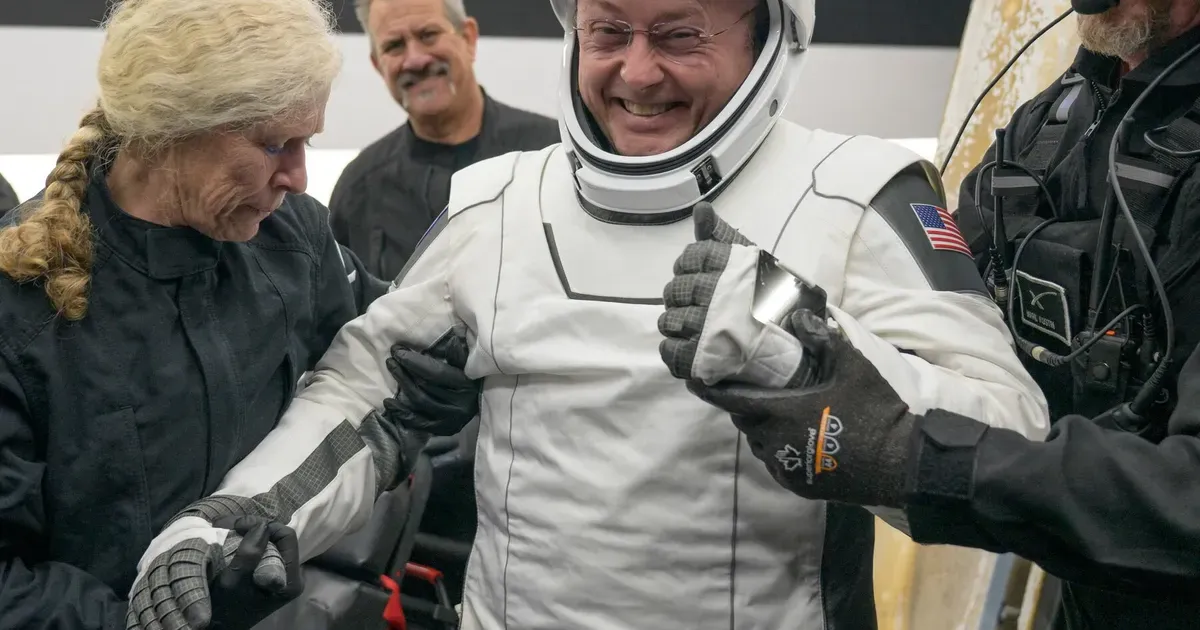
NASA astronaut Mike Fincke's unexplained medical episode aboard the International Space Station turned a private health scare into a larger space medicine question. Fincke later said he was eating dinner on January 7, 2026, when he suddenly lost the ability to speak for about 20 minutes.
He reported no pain, and his crewmates quickly sought help from flight surgeons on the ground. NASA later brought Crew-11 home early aboard a SpaceX Crew Dragon, with the crew splashing down on January 15 so Fincke could receive advanced medical evaluation on Earth.
The most important detail is also the most frustrating one: doctors still had not identified a clear cause. Reporting said a heart attack and choking had been ruled out, but the episode remained unresolved.
Speech Loss Changes Emergency Response
A sudden loss of speech creates an immediate operational problem in orbit. Standard emergency response depends on communication. A crew member who cannot explain symptoms has to be assessed through observation, checklists, telemetry and the judgment of crewmates who are not working inside a hospital.
That is why training matters before a crisis. Astronauts rehearse procedures not because every scenario can be predicted, but because disciplined steps reduce confusion when symptoms are unclear.
The ISS carries medical equipment and trained crew. It is still not a hospital.
Fincke's case also shows why the return decision was conservative. The station can stabilize some emergencies, but it cannot provide the same imaging, specialist care or diagnostic range available on Earth.
NASA Has to Separate Cause From Timing
The fact that the episode happened in space does not prove that spaceflight caused it. That is the line responsible coverage has to hold. Investigators would review medical history, oxygen and carbon dioxide conditions, sleep, medication, radiation exposure, workload and neurological indicators before making any causal claim.
Spaceflight does add unusual stressors: fluid shifts, altered sleep, isolation, radiation exposure and limited diagnostic capacity. Those factors matter for long-duration mission planning. They do not automatically explain one speech-loss episode.
That caution is especially important because radiation and microgravity speculation can outrun evidence. The right conclusion is narrower: a rare neurological-like symptom occurred in an environment where diagnosis and evacuation are both difficult.
Deep-Space Missions Have Less Margin
The Fincke episode matters most for future lunar and Mars missions. On the ISS, crews have near-continuous ground contact and a return vehicle within reach. Deep-space crews will face communication delays, longer evacuation timelines and fewer chances to move a patient quickly to a hospital.
That reality pushes agencies toward better onboard diagnostics, clearer telemedicine protocols and more crew medical training. It also strengthens the case for conservative preflight screening and post-incident reviews that improve procedures without turning private medical history into public spectacle.
The hard read is that human bodies remain one of the hardest engineering problems in spaceflight. A vehicle can have backups, a docking procedure can be rehearsed and a communications system can be made redundant. A sudden neurological symptom still forces judgment under uncertainty. The lesson from Fincke's case is procedural, not theatrical: rare health events will happen, and future missions need response systems sturdy enough to handle them when Earth is no longer close.