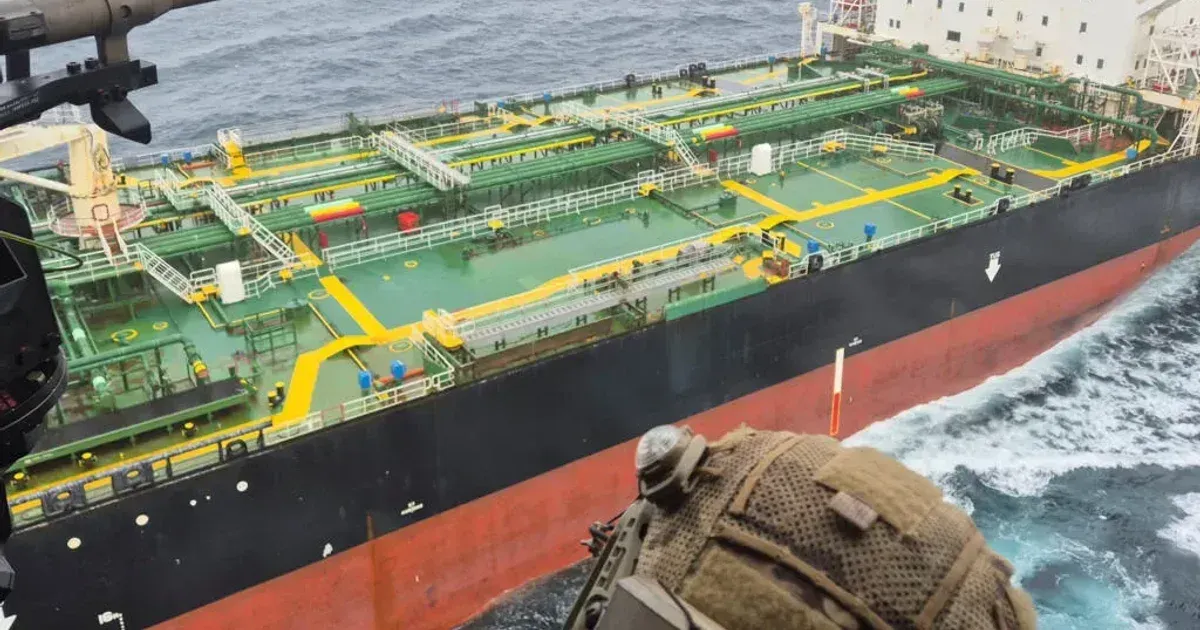
French naval forces and international partners intercepted a sanctioned tanker suspected of carrying Russian oil through the Atlantic Ocean. The detention puts maritime enforcement, sanctions policy and insurance risk into the same operational frame. Allied units targeted the ship after identifying inconsistencies in its registration and cargo manifests. President Emmanuel Macron confirmed the detention of the vessel, named the Tagor, in a social media update published on June 1, 2026. The operation marks a shift in Western efforts to dismantle the clandestine logistics networks used by Moscow to bypass trade restrictions.
Authorities detained the vessel Sunday morning in international waters. Britain and other unnamed partners assisted French officials in the maritime maneuver, which targeted a ship allegedly operating as part of the Russian shadow fleet. Such vessels frequently use false flags and disabled transponders to mask their movements while transporting energy products across global shipping lanes. Detailed surveillance of the Atlantic corridor allowed the multinational force to track the vessel before moving to board and inspect its contents.
Naval officials in Paris reported that the tanker was sailing under a false flag at the time of the interception. Paris has increased its vigilance regarding maritime sanctions enforcement, specifically targeting older vessels with questionable insurance and obscure ownership structures. These ships pose environmental risks due to their age and lack of oversight. Interceptions in international waters require high levels of legal justification and tactical precision, which the French Navy maintained throughout the Sunday operation.
International Cooperation and the Tagor Detention
London provided critical intelligence and support during the mission to secure the tanker. The collaboration between Britain and France highlights a unified front against energy-sector evasion tactics used by sanctioned entities. Records indicate the Tagor was identified months earlier as a vessel of interest by maritime monitoring groups. Detection of the ship required the synchronization of satellite data and physical reconnaissance by naval patrols stationed in the Atlantic.
Marine tracking data showed the vessel had deviated from standard commercial routes prior to being hailed. Sanctions enforcement relies on the ability of Western navies to identify these anomalies in real time. European leaders have expressed mounting concern over the volume of oil being moved through the Atlantic by uninsured and poorly maintained tankers. President Macron characterized the mission as part of a broader commitment to upholding international law and restricting the financial resources available for the conflict in Ukraine.
The Tagor was detained Sunday morning in international waters with the help of Britain and other partners, the French president said.
Legal experts suggest the detention of a ship in international waters involves complex jurisdictional protocols. French authorities must now determine the final disposition of the cargo and the vessel itself. This coordination between London and Paris suggests that future enforcement actions will rely heavily on joint naval task forces rather than individual national efforts. Previous attempts to ignore these maritime sanctions have largely occurred in more congested waters like the Baltic Sea or the Mediterranean. Western nations are working to limit the reach of Russian oil exports both by monitoring Atlantic shipping and countering regional jamming.
Countering the Shadow Fleet Infrastructure
Russian energy exporters have increasingly relied on hundreds of aging tankers to reach global markets. Moscow continues to acquire these vessels through shell companies located in jurisdictions with minimal maritime oversight. Once a ship enters this fleet, it often disappears from official registries or cycles through multiple names and flags in a single month. The interception of the Tagor is a concrete loss for this network, as the vessel is now under the control of French authorities.
Allied vessels remained on site for several hours to ensure the tanker was seaworthy and did not pose an immediate leak risk. The environmental safety of the Atlantic remains a primary concern for coastal nations bordering the shipping lanes. Maritime experts note that shadow fleet vessels often bypass standard maintenance schedules to maximize profit margins. Removing a single high-risk tanker from the water provides a secondary benefit of reducing the likelihood of a catastrophic spill in international waters.
Technical analysis of the ship's AIS (Automatic Identification System) history showed patterns of signal spoofing. Crews on these tankers often transmit false location data to create the illusion of being in port when they are actually conducting ship-to-ship transfers at sea. These transfers allow sanctioned oil to be mixed with legitimate cargo, making it difficult for regulators to trace the origin of the product. French and British reconnaissance units have developed new methods to detect these discrepancies through infrared imaging and acoustic monitoring.
One Tanker Cannot Dismantle the Shadow Fleet
The capture of a single tanker may represent either a shift in maritime law or a symbolic victory for the West. While the seizure of the Tagor removes one asset from a vast network, the underlying infrastructure of the shadow fleet persists through global financial loopholes. The strategic focus has moved from punishing the buyer to physically restricting the transport of the commodity. The transition forces the Russian energy sector to find more expensive and hazardous ways to reach its clients.
The Atlantic Ocean is now a primary theater for sanctions enforcement, requiring permanent naval presence and deep intelligence sharing. Governments in London and Paris appear willing to accept the legal risks associated with international water boardings to preserve the integrity of their trade restrictions. Success in these missions depends on the speed of diplomatic communication and the proximity of fast-response naval assets. If the Western alliance continues this level of interdiction, the operational costs for shadow fleet operators will soon exceed the potential profits from evading sanctions.
Atlantic Enforcement Now Extends Beyond Sanctions Lists
Maritime security in the Atlantic has shifted from traditional piracy prevention to sophisticated geopolitical enforcement. France and the United Kingdom are demonstrating that their naval reach extends far beyond coastal defense, acting as the primary enforcers of European economic policy. The success of the Tagor mission may encourage other European Union members to contribute assets to Atlantic patrols. The collective approach stabilizes the region by providing a clear deterrent against the use of false flags and deceptive shipping practices.
The presence of unmonitored tankers also creates a liability for North Atlantic fishing and tourism industries. Coastal communities rely on clean waters, and the threat posed by an uninsured shadow fleet vessel is a shared burden for every nation on the seaboard. By prioritizing these interceptions, Paris and London are protecting their domestic interests as much as they are enforcing foreign policy. The next phase of this strategy involves identifying the financial backers who provide the capital for these ships, moving the investigation from the high seas to the global banking centers.