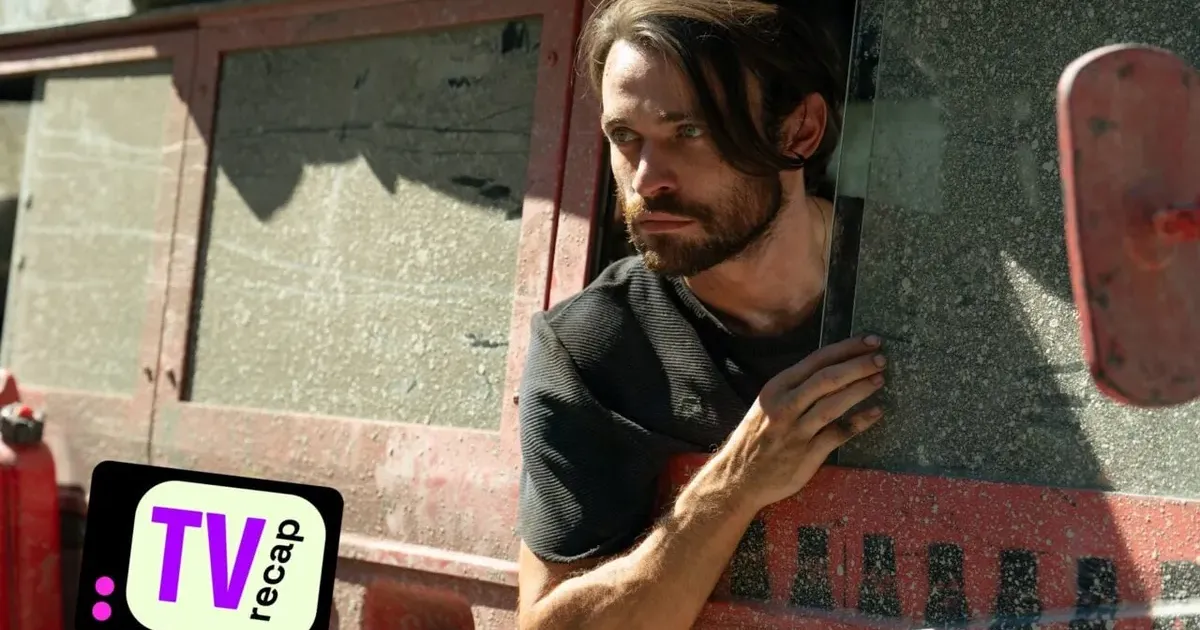
The Paradise Season 2 finale, Exodus, did not close the bunker story so much as blow it open. The episode pushed the underground city into evacuation, sent Xavier Collins toward the Denver Airport bunker and turned Alex from a secret project into the show's main engine for whatever comes next.
Jane Driscoll's fate therefore became a useful argument point for viewers. Dr. Gabriela Torabi appears to kill Jane during the chaos, but the finale later leaves enough visual doubt to keep the question alive. For a series built on withheld information, false identities and controlled reality, the missing certainty matters.
Jane's Fate Depends On The Gap
Jane was never only a physical threat. She was the bunker system's weaponized loyalty: damaged, precise, useful to Samantha Redmond and dangerous to anyone trying to expose the settlement's lies. Torabi killing her would make emotional and structural sense, because it would let a healer end one of the show's clearest instruments of violence.
But the finale does not treat closure as a simple gift. If Jane is dead, her arc becomes proof that Redmond's world consumed the people it shaped. If she survived, she becomes the loose piece that can follow the story out of Paradise and into the wider world. Both options work because the series has spent two seasons making certainty feel unstable.
Alex Changes The Rules Of The Show
The bigger reveal is Alex, the quantum-AI system tied to prediction, time disturbance and Redmond's second project. Alex is no longer just a mystery name whispered inside the bunker. It is a machine with enough narrative force to redirect Xavier, Link and the surviving power structure.
The shift is risky for the show. Prediction can sharpen drama when characters still have to make painful choices. It can weaken drama if every twist starts to feel prearranged by a machine. Paradise has to keep Alex frightening because of what people do with its predictions, not because it can answer every plot problem on command.
Link Makes The Technology Personal
Link's connection to Alex keeps the sci-fi turn from becoming sterile. His shared history with the project, his bond to Redmond's lost son Dylan and the nosebleed/time-vision pattern give the finale a family wound beneath the technology. The question is not only what Alex can calculate. It is whom Alex has already changed.
Link therefore matters for Season 3 because he could become either a key to understanding the machine or another person trapped by it. The series works best when its mysteries are tied to grief, class power and survival, not just mechanical puzzle boxes.
The Bunker Collapse Moves The Story Outside
The evacuation changes the geography of Paradise. A sealed underground city creates paranoia, surveillance and hierarchy. Once the bunker fails, those secrets have to travel with the survivors into a harsher map. The outside world is no longer only a rumor or a mission objective; it is where the show's moral debts have to be paid.
Redmond's sacrifice also complicates the finale. She dies containing the reactor disaster, but that does not erase the structure of control she built. The show can honor the sacrifice without pretending she was simply redeemed.
Season 3 Needs Consequences, Not Just Answers
A successful next season will not be a checklist of reveals. It will ask what survival looks like after people learn they were sorted, managed and lied to by a private system that claimed to be saving humanity. Xavier's trip toward Alex should carry that anger, not just curiosity.
Jane's possible survival, Alex's predictive power and the Denver Airport bunker all point in the same direction: Paradise is moving from a murder mystery inside a controlled town to a fight over who gets to define the future. The finale's ambiguity works because it opens that fight. It will only hold if Season 3 lets the consequences hurt.