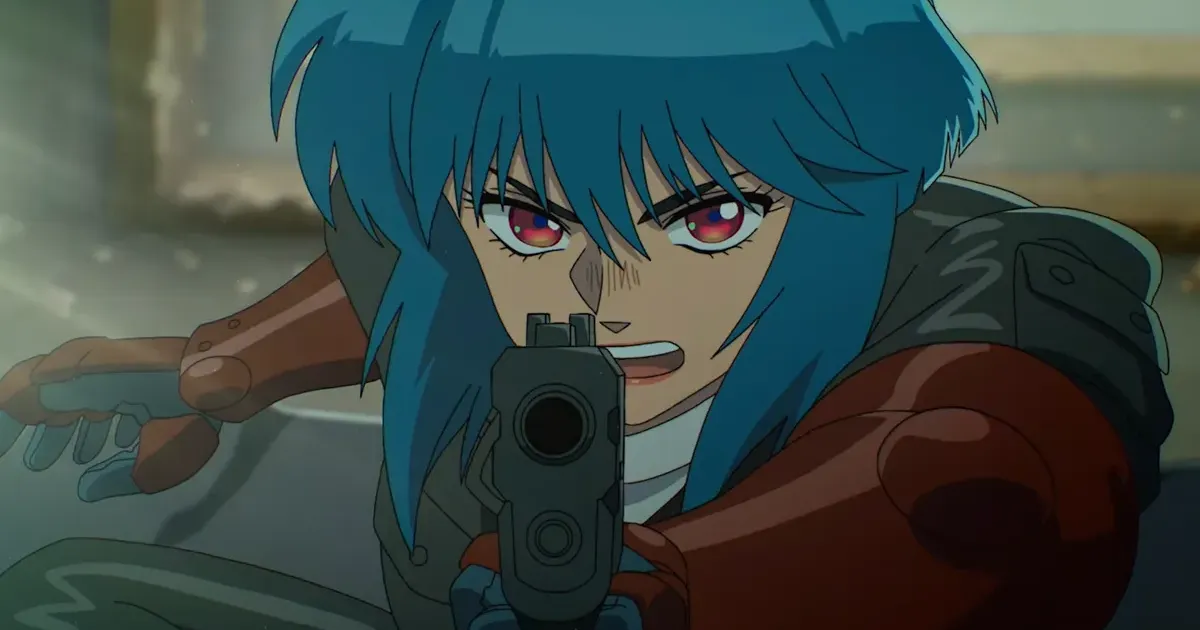
Science SARU's Ghost in the Shell trailer did more than announce another franchise revival. It framed the new Prime Video anime as a return to Masamune Shirow's original manga energy: stranger, looser, funnier and more mechanically cluttered than the colder image many viewers associate with later adaptations.
The trailer campaign built toward the July 7, 2026 Prime Video launch, with the series streaming globally after months of expectation from anime and cyberpunk audiences. That platform matters because Ghost in the Shell is no longer only a cult title for viewers who know the 1995 Mamoru Oshii film or Stand Alone Complex. It is a legacy brand trying to reach people who met cyberpunk through works that borrowed from it.
Science SARU gives the project a clear reason to exist. The studio's reputation for elastic, expressive animation fits a version of Ghost in the Shell that leans back toward the manga rather than another polished, distant reboot. The question is whether that visual thesis can carry a full season, not just a trailer.
The Manga Tone Is The Real Bet
The most important shift is tone. Shirow's manga was not only solemn philosophy about identity and networks. It also had slapstick, technical detail, visual clutter and a more abrasive Motoko Kusanagi. Science SARU's footage points toward that mixture instead of treating the franchise as a museum piece of cyberpunk seriousness.
That choice is risky in the right way. Longtime fans may welcome a version that remembers the manga's oddness. Viewers who know only the 1995 film may be surprised by a Major who feels less austere and more volatile. New viewers may find the looser tone easier to enter than a lecture about consciousness and cybernetics.
The danger is surface faithfulness. Character designs, Fuchikoma-style machinery and manga-inflected line work can attract attention, but Ghost in the Shell has always needed more than familiar silhouettes. It works when police procedure, bureaucracy, corporate power, artificial intelligence and bodily identity collide inside cases that actually move.
Science SARU Has The Right Tools
Science SARU is well suited to that collision. The studio can make animation feel loose without losing design control, and that is exactly the balance this property needs. A sterile Ghost in the Shell can become another prestige reboot. A messy, kinetic one has a better chance of feeling alive.
The production team also gives the series a distinct identity. Mokochan directs, EnJoe Toh handles scripts, and the adaptation arrives with Prime Video distribution rather than as a niche domestic-only release. That combination puts creative pressure and commercial reach in the same place.
The global rollout raises expectations. Prime Video can deliver the audience, but it cannot supply the reason for another Ghost in the Shell by itself. The show has to justify why the franchise is being revisited now, after decades of films, television, games and live action.
A Legacy Title Has To Beat Its Own Influence
The hardest task for a new Ghost in the Shell is that its ideas already won. Cybernetic bodies, networked identity, AI agency and state-corporate security systems have become familiar material across games, anime and streaming science fiction. Many younger viewers have seen the descendants before the source.
That means the new series cannot rely on historical importance. It has to feel sharper than the works it influenced. A manga-rooted approach helps because it can restore textures that later cyberpunk sometimes flattened: humor, clutter, workplace friction and the uneasy normality of living inside a technological state.
The trailer's best argument is that Science SARU is not promising a generic modernization. It is promising a version of Ghost in the Shell that remembers the source was dense and weird before it became iconic.
The Episodes Now Carry The Burden
A trailer can win goodwill. Weekly episodes have to prove consistency in motion, writing and tone. The series needs enough clarity for new viewers and enough complexity for fans who expect more than action set pieces.
If Science SARU succeeds, the show could become a model for reviving older anime properties without sanding away what made them difficult. If it fails, it will show how hard it is to turn cyberpunk history into fresh television.
The trailer at least gave the project a coherent thesis: visual specificity first, philosophical weight second and enough character energy to keep the material from becoming homework. That is the right starting point. The real test is whether Motoko, Section 9 and Shirow's future can still feel dangerous after the future they imagined has been copied for decades.