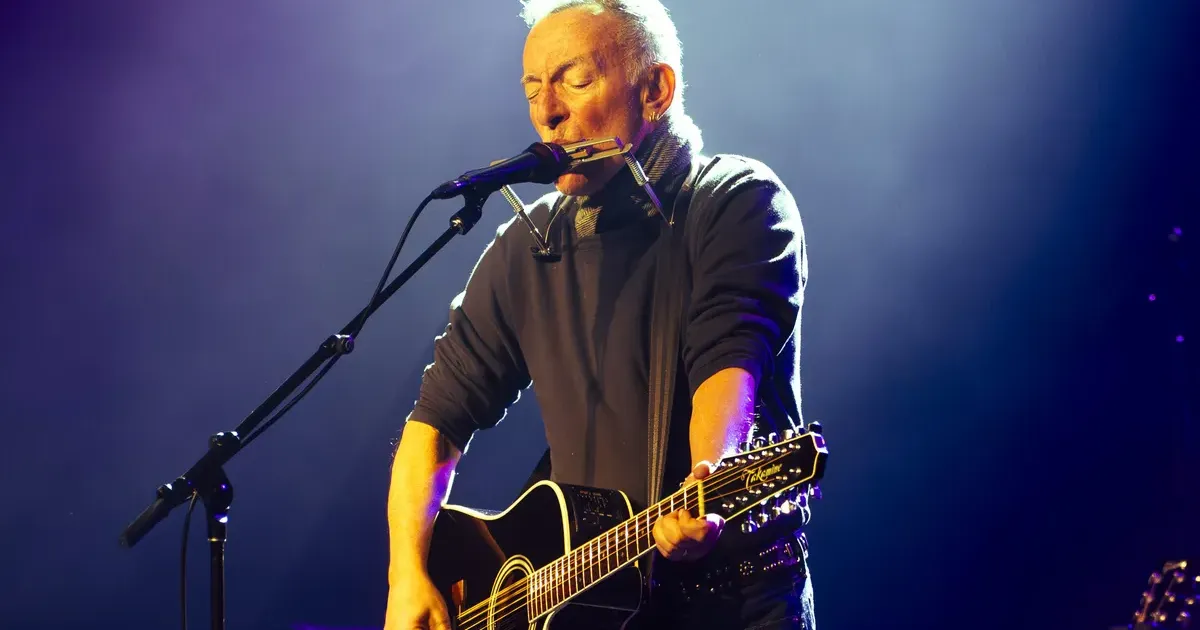
Bruce Springsteen's Land of Hope and Dreams American Tour did not ease into politics. It opened at Minneapolis' Target Center with Edwin Starr's War, Tom Morello onstage and a clear statement that the night would be a protest concert as much as an E Street Band show. That choice made the politics structural, not decorative.
The March 31 opener lasted nearly three hours and turned Minneapolis into more than a first stop on an itinerary. Springsteen used the city as the emotional center of the tour's argument: democracy, immigration enforcement, the war in Iran, constitutional limits and the American promise he has been writing about for half a century. Fans who wanted escape still got a rock show. They also got a warning.
War Was the Opening Thesis
Opening with War was not a neutral setlist decision. Springsteen has used the song before as a protest vehicle, and placing it first told the audience that the evening would not wait until the encore to reveal its politics. With Morello adding his own history of activist guitar theater, the arrangement connected soul protest, arena rock and current anti-administration anger.
This differs from a singer making a speech between hits. The concert's musical sequence carried the argument. Born in the U.S.A., Death to My Hometown, American Skin, Long Walk Home, The Ghost of Tom Joad and Land of Hope and Dreams all work as songs, but inside this tour they also became chapters in a civic sermon about power, violence, work, memory and national belonging.
Minneapolis Gave the Protest a Local Spine
The strongest local moment was Streets of Minneapolis, Springsteen's song tied Renee Good and Alex Pretti to the tour's broader argument over federal enforcement and public grief. Performing it in the city, alone at center stage before the band widened the sound again, gave the show a memorial weight that a generic anti-Trump speech would not have carried.
The local specificity mattered because Springsteen's politics can easily be dismissed as national celebrity rhetoric. In Minneapolis, he tied the language of democracy to named people and a specific place. The crowd response, phone lights and chant around immigration enforcement made the show feel less like campaign branding and more like public mourning turned into organized anger.
The Trump Fight Is Now the Main Event
Springsteen has criticized Republican presidents before, but this tour put President Donald Trump and his administration at the center rather than the edge. The tour announcement had already framed the run as a defense of democracy, freedom, the Constitution and the American dream against authoritarian politics. The opening night delivered on that promise without subtlety.
The directness brings costs. People who oppose Springsteen's politics will hear the show as partisan theater from a wealthy musician. Supporters will hear an artist refusing to treat the stage as neutral while democratic norms are under pressure. Both reactions are built into the project. The tour is not trying to avoid the argument; it is trying to force it into the arena.
Rock Nostalgia Became a Delivery System
The sharpest move was using familiar Springsteen mythology against comfort. A lot of fans come to an E Street show carrying memory: youth, radio, highways, work, parents, hometowns, old losses. Springsteen used that emotional capital to make the present feel urgent. Nostalgia was not the destination. It was the delivery system.
The same balance let the set move from anger to uplift without feeling random. Prince's Purple Rain in Minneapolis, Chimes of Freedom at the end, and the Land of Hope and Dreams title frame all pushed the night toward solidarity rather than despair. The protest was harsh, but the show still sold hope as a discipline.
The Risk Is a Sealed Room
The obvious weakness is audience selection. Arena tickets are expensive. Springsteen crowds are not random samples of the country. A political speech inside that room will not convert many people who already see him as an enemy. That does not make the concert meaningless, but it limits what the performance can actually do.
Springsteen is no longer trying to be a universal jukebox. He is choosing to be a public alarm, and alarms are designed to interrupt comfort. The Minneapolis opener showed exactly what that means: fewer illusions of neutrality, more pressure on the audience, and a tour built around the belief that music can still give political fear a shared language.