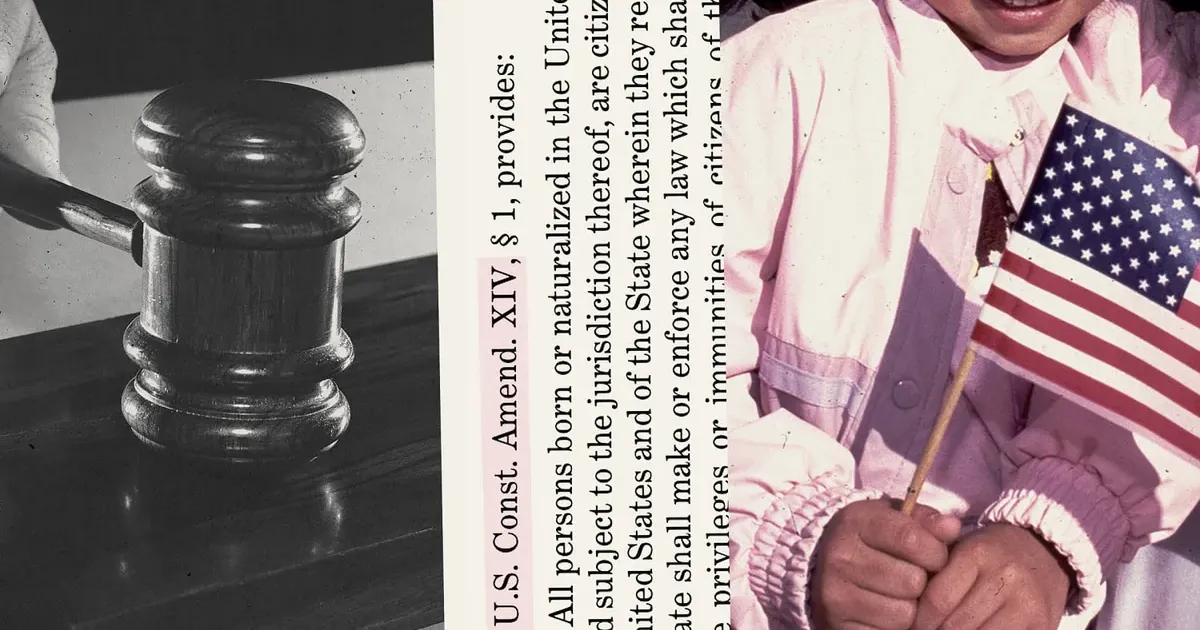
The Supreme Court's 2026 birthright citizenship ruling turned Donald Trump's most aggressive citizenship order into a constitutional defeat. The Court rejected the administration's attempt to deny automatic citizenship to children born in the United States to parents who are unlawfully present, temporarily present or otherwise outside permanent immigration status.
The decision preserved the rule that has governed American citizenship for generations: birth on U.S. soil generally carries citizenship when the child is subject to U.S. jurisdiction. That rule is not a courtesy from an administration. It is tied to the Citizenship Clause of the Fourteenth Amendment.
All persons born or naturalized in the United States, and subject to the jurisdiction thereof.
That phrase was the center of the fight. Trump's Executive Order 14160, signed on January 20, 2025, tried to redefine who counts as subject to U.S. jurisdiction at birth. The Supreme Court said the president could not do that by executive order.
The Order Tried To Rewrite The Starting Point
Executive Order 14160 targeted two broad categories. It covered children born when the mother was unlawfully present and the father was neither a U.S. citizen nor a lawful permanent resident. It also covered children born when the mother was in temporary status, such as a student, work or tourist visa, and the father was neither a citizen nor a lawful permanent resident.
That design made the order much wider than a slogan about unlawful migration. It reached families living legally in the United States on temporary visas, including workers, students and visitors. It also would have forced agencies to examine parental status at the first bureaucratic moment of a child's life.
Wong Kim Ark Carried The Heavier Weight
The administration leaned on jurisdiction arguments and old cases, including Elk v. Wilkins, the 1884 decision involving a Native American man whose relationship to tribal sovereignty was treated under a different constitutional framework. That case could not carry the weight the administration placed on it.
The controlling precedent was United States v. Wong Kim Ark, the 1898 case recognizing citizenship for a child born in San Francisco to Chinese parents who were not U.S. citizens. The constitutional logic was direct: people present in the United States are ordinarily subject to its laws. They can be arrested, sued, taxed and prosecuted. That is jurisdiction in the relevant legal sense.
The Practical Burden Would Have Been Immediate
The order would not have operated as an abstract theory. It would have pushed hospitals, state vital-records offices, passport agencies and immigration officials into sorting newborn citizenship through parental immigration status. That burden would have landed before a child could speak, before any later immigration process and before many families had stable legal advice.
Birth certificates and passport applications could have become immigration-screening tools. Families with temporary work visas could have faced uncertainty over a child born in the country where they were legally living. Undocumented families could have faced an even harsher outcome: a U.S.-born child treated as outside the political community from birth.
The Ruling Did Not End The Politics
Trump and his allies did not accept the decision as the final political word. After the ruling, Trump demanded that the Court re-examine the case and called the outcome a miscarriage of justice. Allies also floated legislation, restrictions tied to birth tourism and possible constitutional-amendment routes.
Those options show the difference between politics and presidential power. Congress can argue about immigration policy. States and national campaigns can press for constitutional change. But a president cannot erase the Citizenship Clause with a signature, and rehearings at the Supreme Court are rare.
The Legal Wall Is Higher Now
The administration tried to convert citizenship from a constitutional guarantee into a permission system. The Court refused. That does not make immigration politics quieter, and it does not prevent future campaigns from attacking birthright citizenship as policy.
It does mean the legal route is narrower. Any serious attempt to end birthright citizenship now has to confront the Fourteenth Amendment, Wong Kim Ark, the administrative chaos of status-screening newborns and the constitutional cost of creating a hereditary class of U.S.-born children excluded from citizenship. The ruling leaves the politics alive, but it makes clear that birthright citizenship is not a policy memo waiting for a different president.