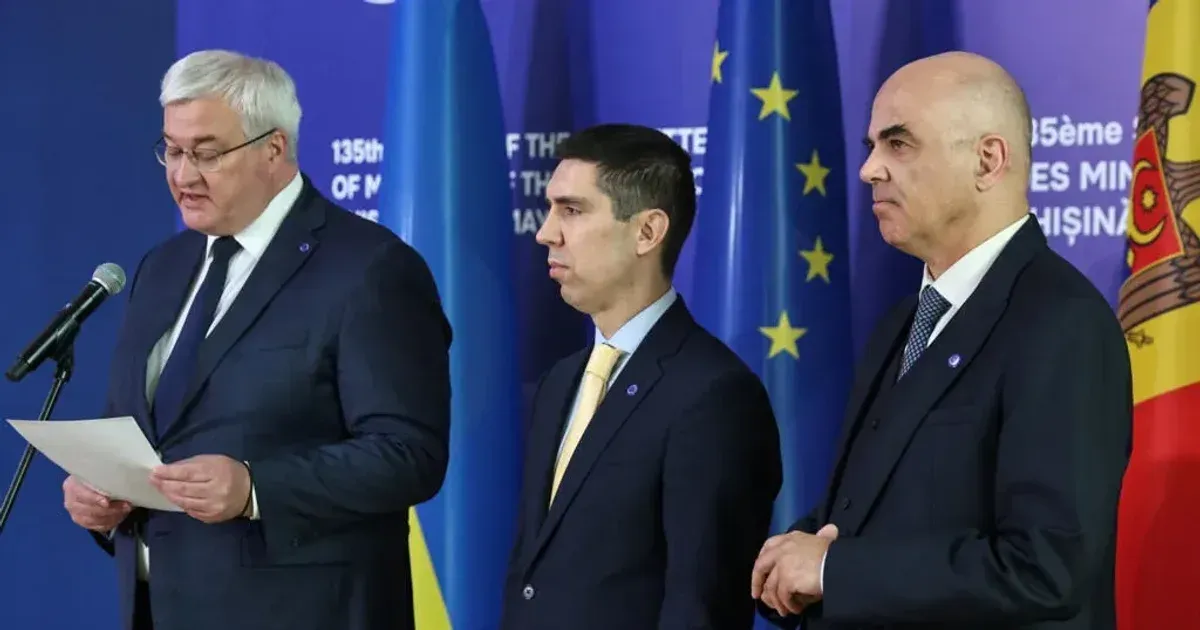
Thirty-six countries pledged support for a special tribunal to prosecute Russian leadership for the crime of aggression. The prosecution push now forces allies to measure accountability against wartime diplomacy. It also gives European governments a legal track that Moscow will reject politically. Official confirmation of the coalition came on May 15, 2026, during a high-level summit in Moldova where representatives from Europe and beyond gathered to formalize a new legal framework. The move identifies a specific path to hold Moscow accountable for the invasion through a body designed to circumvent existing jurisdictional gaps in international law.
Australia and Costa Rica joined 34 European nations in signing the agreement to establish the tribunal. Participating states intend for the body to focus exclusively on the planning, initiation, and execution of the war. While the International Criminal Court handles war crimes and crimes against humanity, it lacks the mandate to prosecute the crime of aggression against non-member states without a United Nations Security Council referral. The Moldovan talks sought to create a mechanism that bypasses this hurdle by relying on the collective legal authority of the participating nations.
Tribunal Mandate and Jurisdiction
This framework aims to bridge gaps in existing international law through a multilateral approach to accountability. The agreement also gives participating governments a common venue for evidence preservation, witness coordination, and future arrest-warrant requests.
Prisoner Exchange and Ceasefire Terms
Parallel to the legal discussions in Moldova, Russia and Ukraine completed an exchange of 410 prisoners of war. Each side released 205 personnel on Friday under a diplomatic arrangement enabled by Donald Trump. The agreement relied on a three-day ceasefire established earlier this month, which provided the necessary security guarantees for the transfer. Officials in Washington confirmed that the swap occurred at a designated border crossing under the supervision of international observers.
Presidential administration sources in Kyiv noted that the swap is part of a broader plan for humanitarian cooperation. Volodymyr Zelenskiy described the event as a foundational step toward a fuller exchange program. The current deal targets the release of 1,000 prisoners from each side over the coming months. Friday brought the most significant movement of personnel since the ceasefire went into effect.
Ukrainian President Volodymyr Zelenskiy described the exchange as the first step in a larger prisoner-of-war swap after Kyiv and Moscow agreed to seek the return of 1,000 POWs from each side under the terms of the arrangement.
Kyiv Strike and Civilian Toll
Success in the prisoner exchange stands in contrast to the escalating civilian toll within Ukraine. A Russian missile strike hit an apartment complex in Kyiv on Friday morning, resulting in at least 24 fatalities. Rescue workers spent the afternoon clearing rubble from the collapsed structure as smoke billowed from the residential block. Among the victims was 12-year-old Lyubava Yakovleva, whose father had previously been killed during the conflict.
Witnesses described a scene of rapid destruction as the missile impacted the center of the building during the early morning hours. Emergency services in Kyiv reported that several people remain missing under the debris. The strike occurred despite the ongoing diplomatic activity in Moldova, where delegates were discussing the long-term legal consequences of the invasion. Medical teams established a triage center near the site to assist dozens of wounded residents.
Recovery teams pulled bodies from the debris until late into the night.
Moscow has not officially commented on the specific residential strike but continues to maintain that its military operations target infrastructure rather than civilian housing. The strike in the capital has renewed calls from Ukrainian officials for more advanced air defense systems. Within the summit in Moldova, the news of the 24 deaths added urgency to the discussions regarding the special tribunal. Legal experts at the meeting argued that the crime of aggression is the root cause of every subsequent civilian casualty recorded in the war.
Coalition Reach and Enforcement Limits
The 36-nation group has not yet finalized where the tribunal will sit or how it will secure the physical presence of defendants. Most legal analysts suggest the body may first focus on evidence files, public indictments, and warrants that would limit the travel of Russian officials if defendants remain outside its reach. Australia and Costa Rica emphasized that their participation signals the global nature of the legal challenge, moving the initiative beyond a strictly European concern.
The Tribunal Must Balance Accountability Against Wartime Diplomacy
Can a court without a police force actually compel a nuclear power to stand trial? The formation of a 36-nation coalition for a special tribunal attempts to answer this by shifting from symbolic condemnation to a structured legal blockade. By focusing on the crime of aggression, these nations are targeting the decision-makers in the Kremlin specifically, creating a permanent legal record that complicates any future normalization of diplomatic relations. This approach effectively freezes the status of those indicted, turning international travel into a legal minefield for the Russian elite.
The coincidence of the POW swap and the Kyiv strike highlights the dual-track reality of current diplomacy. Washington has prioritized immediate humanitarian results through the Trump-brokered deal, while the European-led tribunal focuses on long-term accountability. These tracks are not necessarily aligned; a prisoner exchange requires a level of engagement with Moscow that a criminal tribunal explicitly seeks to delegitimize. Negotiating a swap of 2,000 people requires a functional dialogue, yet the tribunal defines the other side of that dialogue as criminal. Balancing these priorities will determine if the ceasefire holds or if the legal pursuit of the crime of aggression triggers a collapse in humanitarian cooperation.