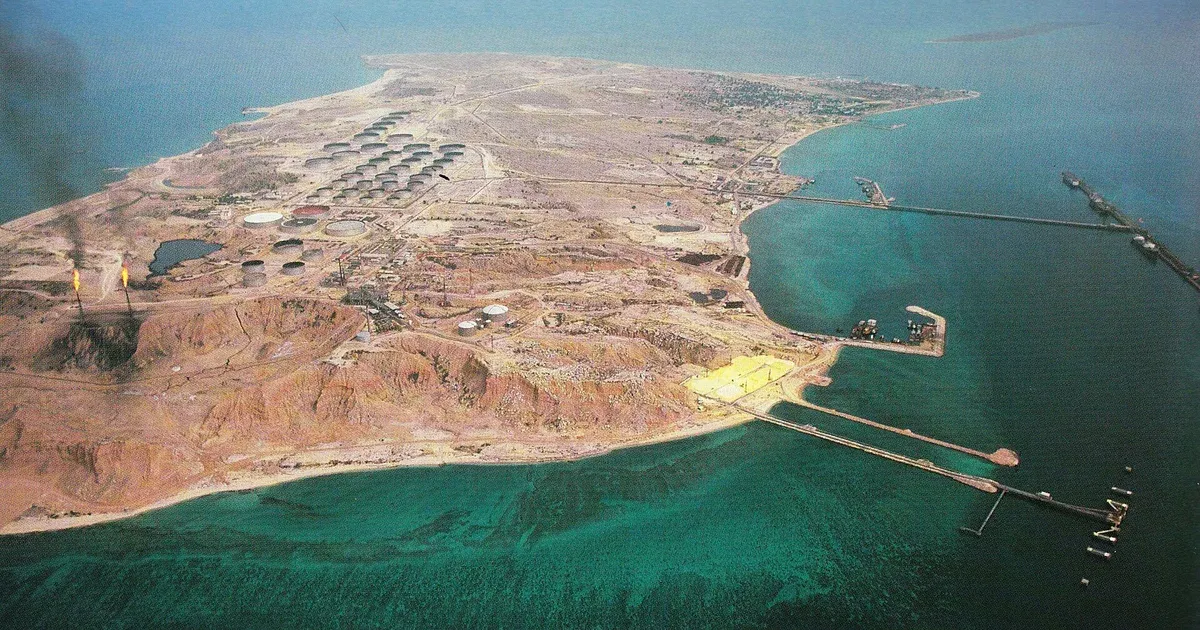
Donald Trump's comments about taking Iran's Kharg Island turned the Iran war debate from strikes and sanctions toward a much more dangerous question: whether oil infrastructure itself could become a U.S. war aim. The threat was framed as leverage, but Kharg is not a symbolic target. It is Iran's central crude export hub and one of the regime's most sensitive economic assets.
The distinction is crucial. Threatening Kharg can pressure Tehran because oil revenue funds the state, the military and the patronage networks that help the regime survive. Actually seizing or occupying it would be a different order of conflict. It would move the United States from coercion into possession, with legal, military and market consequences that cannot be waved away as bargaining language.
"Maybe we take Kharg Island," Trump said.
The Threat Has Real Leverage
Kharg Island is important because a large share of Iran's crude exports moves through or depends on facilities connected to it. That makes it one of the few targets that can immediately change Tehran's revenue outlook and the psychology of global oil markets. If the U.S. wants to show Iran that escalation can reach the regime's wallet, Kharg is the obvious pressure point.
That does not make the threat straightforward. Iran can present any move against Kharg as an attack on national survival, not just on military capability. A pressure tactic that looks decisive in Washington can become a rallying point in Tehran. The more the fight centers on oil, the more readily Iran can argue that the war is about resource control rather than security.
Taking An Island Is Not Like Bombing A Site
The operational problem is extensive. An island seizure would require intelligence, air-defense suppression, naval control, landing capacity, logistics and protection against missiles, drones and sabotage. It would also require a plan for what happens after U.S. forces arrive. Holding an oil terminal under fire can be more difficult than taking it, especially when nearby shipping lanes, Gulf bases and regional energy infrastructure remain exposed.
Vague language is therefore dangerous. A president can say an island is an option in one interview. Commanders then have to translate that option into force packages, casualties, legal authorities, exit plans and escalation ladders. If the political goal is unclear, the military plan inherits that confusion.
The Legal Case Would Be Vulnerable
Seizing another country's oil infrastructure would invite immediate accusations of unlawful resource capture and violation of sovereignty. Washington can argue self-defense, protection of navigation or wartime necessity in some circumstances. Those arguments become much less credible if the public rationale sounds like taking oil to offset costs or punish an adversary economically.
Allies would also have to live with the precedent. Many governments may support pressure on Iran's military activity or its threats to shipping. Fewer will want to defend a U.S. operation that looks like occupying a hostile oil hub. The difference between neutralizing a threat and controlling a resource is not rhetorical. It is the line that determines whether coalition support holds or fractures.
Markets Would Price Escalation Immediately
Kharg is important to traders because damage, occupation or even credible threat around the island can affect Iranian exports and raise risk across the Gulf. Insurance costs, tanker routing, refinery planning and price hedges would all move before the first full assessment of physical damage. In energy markets, a contested oil terminal can become expensive before it becomes unusable.
That gives Washington a short-term weapon and a long-term trap. Threatening Kharg may force Tehran to reconsider the cost of defiance. But if the threat pushes oil prices higher, angers importers and makes diplomacy more difficult, the leverage begins to cut back against the country using it.
The strategic test is simple: if the goal is to reduce Iranian revenue, sanctions, interdictions, export monitoring and negotiated limits are slower but more controlled instruments. They do not require American troops to hold a hostile island and defend oil facilities in the middle of a regional war. They also keep the argument closer to security than possession.
Kharg Island has value as a threat only while Washington can avoid becoming trapped by its own words. Once the United States sends forces to take and hold oil infrastructure, the mission changes. It stops being a pressure campaign and becomes an occupation problem with a commodity price attached. That is not a forceful strategy. It is a battlefield with no easy exit.