President Donald Trump's expanded posture around the Gulf turned the Iran crisis into a test of deterrence, oil security and constitutional control over war. The immediate issue was the Strait of Hormuz: whether Iranian pressure, missile threats and proxy action could make a vital energy route too unpredictable for normal commerce. The deeper issue was Washington's habit of calling a buildup deterrence even when the other side may read the same movement as preparation for attack.
The distinction is important because the Gulf was already crowded with risk. U.S. forces were reassuring partners, protecting bases and warning Iran against wider escalation. Iran was using maritime pressure, missile threats and regional networks to impose costs without needing to defeat the U.S. Navy directly. Once ships, aircraft and Marines move into that environment, military signaling becomes difficult to control.
Hormuz Was The Pressure Point
Hormuz is not only a shipping lane. It is an inflation channel, an insurance market, an Asian import route and a political vulnerability for any U.S. president. Even partial disruption can push oil and liquefied natural gas prices higher, widen tanker risk premiums and force governments to explain why a regional war is appearing in household fuel costs.
Iran understands that leverage. It does not have to close the strait cleanly to cause damage. Threats, mines, drones, missile alerts and uncertainty over viable routes can slow traffic and change pricing. U.S. commanders therefore treat visible presence as reassurance. The problem is that deterrence has to be interpreted correctly by both sides. A reinforcement meant to prevent war can be treated by Tehran as evidence that war is coming.
The deployment question therefore cannot be separated from war powers. Maritime security, defensive force protection and offensive strikes are different missions. They may use the same ships and aircraft, but they require different public explanations, different legal theories and different congressional scrutiny.
Ukraine Made The Drone Fight Less Local
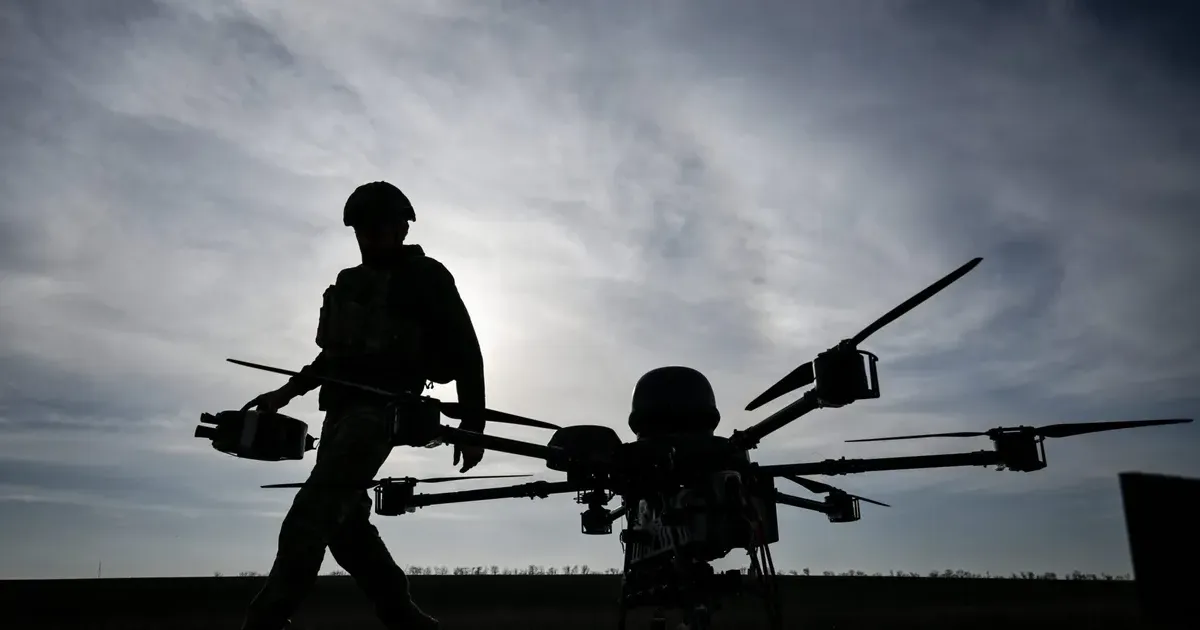
The Gulf crisis also collided with the lessons of Russia's war on Ukraine. Iranian-designed Shahed-type drones had become central to Russia's pressure on Ukrainian cities and infrastructure. Ukraine, after years of nightly interception work, electronic warfare adaptation and low-cost drone innovation, had practical knowledge that Gulf states and U.S. planners could not ignore.
That does not mean Ukraine and the Middle East had merged into one formal war. The legal authorities, alliances and objectives remained separate. But the technology moved across theaters. A drone family used against Kyiv could shape base-defense planning in Bahrain, Qatar or Saudi Arabia. A cheap interceptor tested in Ukraine could become relevant to Gulf air defense. Russian-Iranian cooperation, even when disputed in detail, made the two files more difficult to treat as separate desks.
The strategic spillover cuts both ways. If the United States diverts attention and air-defense stocks to the Gulf, Ukraine worries about shortages against Russia. If Hormuz pressure lifts oil prices, Moscow can benefit from higher energy revenue. If Gulf states draw on Ukrainian counter-drone expertise, Kyiv gains influence in a region that has tried to avoid choosing sides too openly.
Deterrence Can Look Like Escalation
The Trump administration's central problem was visual. A carrier movement, Marine arrival, air-defense reinforcement or strike package may be intended to calm allies and warn Iran away from a larger fight. Seen from Tehran, the same facts can look like staging for a wider operation. In a crisis already built on retaliation, that perception can shorten decision time.
Iranian commanders facing a possible strike have incentives to disperse launchers, move command nodes, prepare drones and authorize faster response plans. U.S. commanders seeing those preparations may then read them as fresh escalation. That is how a deterrence cycle can become self-feeding. Each side says it is reacting to the other; both end up closer to the fight they claim to be preventing.
Loose language around troop movements is therefore dangerous. A visible buildup is not proof of a planned land invasion. It is proof of option-building. The public difference is consequential. If the mission is to keep Hormuz open, say that and define the limits. If the mission is to degrade Iran's military, say that and ask for the authority. If the mission is regime pressure, do not hide it inside the vocabulary of shipping security.
Congress Cannot Be A Spectator
Congressional oversight becomes more important as the mission blurs. Presidents can move forces to protect Americans and deter threats, but sustained hostilities require a political mandate that goes beyond situational briefings. Lawmakers need to know what objectives are being pursued, what counts as success, what risks to U.S. bases are being accepted and where the operation stops.
That is not procedural fussiness. It is how democracies prevent limited deployments from becoming open-ended commitments. The United States has been through this pattern before: a narrow security problem expands, the mission language stays vague, and years later officials explain why withdrawal is more difficult than escalation sounded at the start.
The Buildup Needs A Stopping Rule
The Gulf buildup can be justified only if it has a clear stopping rule. Protecting shipping, reassuring partners and deterring Iran are defensible aims. Combined with Ukraine-related air-defense pressures and Russian-Iranian drone links, however, they can create a strategic machine that demands more force than the public has been asked to approve.
If the deployment keeps Hormuz open and prevents Iran from widening the war, it may look like disciplined pressure. If it turns into a rolling set of strikes, counterstrikes and emergency deployments, the administration will have converted maritime security into a broader war by degrees. The danger is not only that Washington may choose to fight. The danger is that it may slide into fighting while still describing every move as prevention.