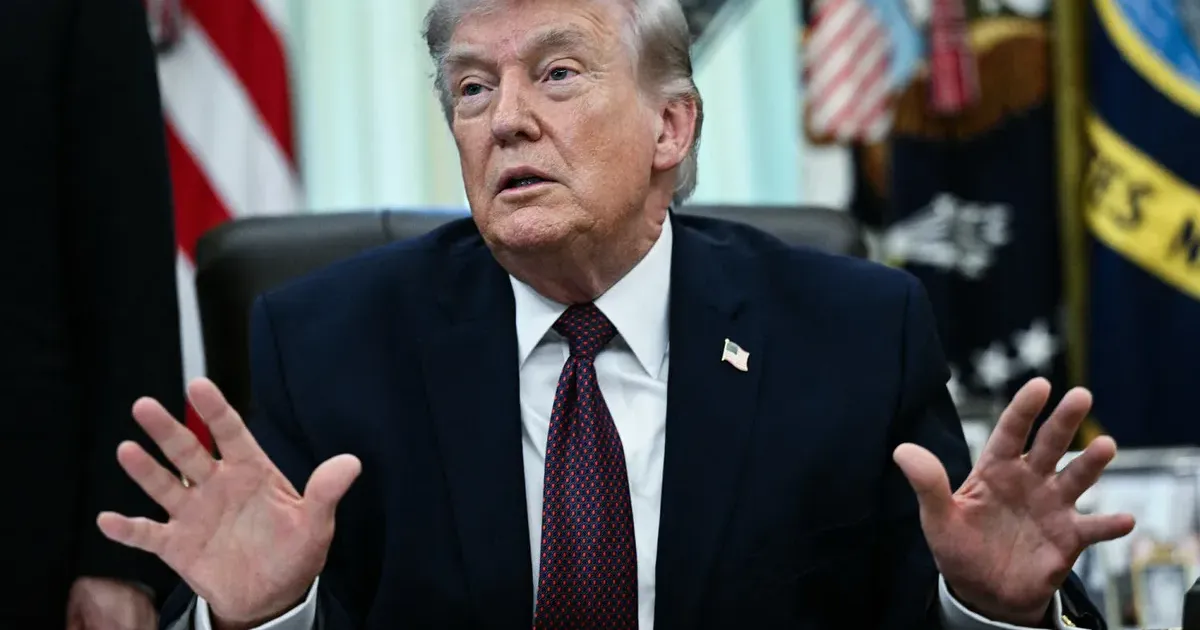
President Donald Trump's April 1 national address on Operation Epic Fury was built around a familiar wartime promise: limited aims, decisive force and a finish line close enough for the public to see. He told Americans that the U.S. campaign against Iran was working, that core objectives were nearing completion and that countries dependent on the Strait of Hormuz should do more to keep commerce moving. In the moment, the speech was meant to project control.
By July, that control looked far less certain. A fragile ceasefire collapsed, U.S. strikes resumed around Iranian military and maritime targets, Tehran answered through attacks and threats, and the Strait of Hormuz again became the pressure point for energy markets and allied planning. The April address now reads less like a closing argument than an early warning about how short wars become long contests.
The April Speech Sold Completion
The White House framed Operation Epic Fury as a campaign that was systematically damaging Iran's ability to threaten the United States, its allies and global shipping. Trump praised U.S. forces, stressed military effectiveness and implied that the strategic purpose was close to being met. Near-completion language is politically useful because it gives the public a sense that force is bounded.
It also creates a measurable promise. If the war keeps expanding, each new strike is judged against the earlier claim that the job was nearly done. Presidents often discover that the easiest part of a short-war speech is the adjective. Keeping the war short is the part that tests strategy.
Hormuz Was Always the Unstable Center
Trump's burden-sharing message on the Strait of Hormuz had a clear logic. Many countries rely on energy and goods moving through the waterway, while the United States carries a large share of the military burden when shipping is threatened. Asking allies and major importers to take more responsibility fits the president's broader view of security costs.
But Hormuz is not only a cost-sharing problem. It is a choke point where military signaling, insurance rates, tanker routing, Gulf diplomacy and Iranian retaliation all meet. A blockade, toll proposal, partial restriction or naval escort plan can move oil prices before it changes facts on the water. Public pressure therefore on partners can unsettle them as much as it mobilizes them.
The Ceasefire Collapse Changed the Meaning
The later breakdown of the ceasefire exposed the weakness in the April frame. If Iran's nuclear capacity, missile forces, proxy channels and maritime pressure remained active enough to require renewed U.S. strikes, then the original claim of near-completion needed a narrower definition. What exactly had been completed? Which capability was removed? Which threat had only been suppressed?
Those questions matter because wars often drift through undefined verbs. Degrade, deter, contain, finish and punish can all sound decisive from a podium. Commanders, diplomats and allies still have to translate them into conditions that can be verified. Without that translation, every follow-up action can be folded into the original mission until the boundary disappears.
Infrastructure Threats Raise the Escalation Bar
Trump's July threats to hit Iranian power plants, bridges and other infrastructure if Tehran refuses a deal mark a different level of pressure from the April presentation. Military strikes on missile, drone or coastal-defense assets can be described as directly tied to the battlefield. Strikes on civilian-linked infrastructure carry broader humanitarian, legal and diplomatic risk, even when the administration argues that the targets support regime capacity.
The wider target set changes allied calculations. Gulf states want Iranian pressure contained, but they also fear a regional war that closes shipping lanes, damages oil facilities or invites attacks on their territory. Europe and Asian energy importers want deterrence without a price shock. The more the target list widens, the harder it becomes to keep the coalition calm.
Domestic Politics Will Not Stay Separate
The April address tried to keep the war inside a disciplined narrative: strength abroad, control at home, no open-ended commitment. July's escalation makes that harder. Oil prices, military casualties, congressional authorization fights and public doubts over objectives can bring a distant conflict into domestic politics quickly.
Supporters may still see Trump's posture as necessary pressure on Tehran. Critics will point to the same sequence as evidence that the administration oversold a clean ending. Both sides will use the April speech because it created the standard against which the campaign is now judged.
The Short-War Promise Became the Trap
The strategic trap is that Trump did not simply defend a war in April. He sold a timeline. That is riskier than selling force, because the adversary gets a vote. Iran can absorb strikes, disperse assets, harass shipping, use proxies, wait for allied strain and force Washington to choose between escalation and a less-than-clean outcome.
Operation Epic Fury may still produce tactical success. It may damage Iranian capabilities and pressure Tehran back toward talks. But the July escalation shows why a president should be careful with near-completion language. A short war can become a long shadow before the public has time to notice the hinge. The speech promised a finish line. Hormuz, Iran and energy markets have spent the months since moving it.