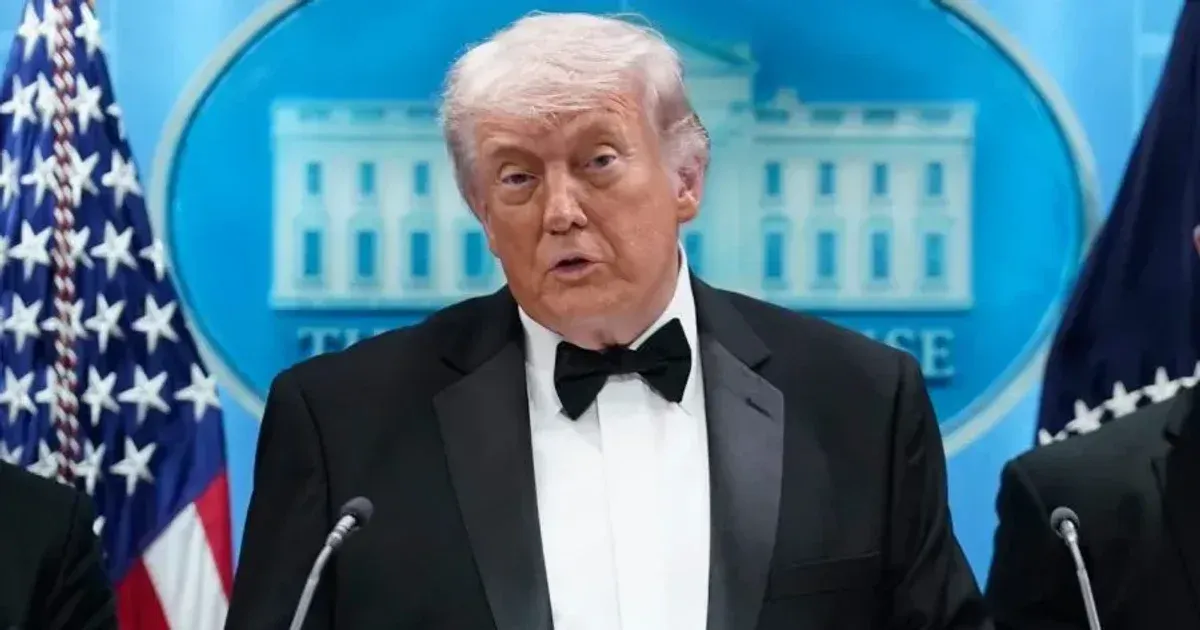
Trump’s decision to post images of a bound suspect turned an active security case into a public spectacle within hours. The photos reassured supporters that the alleged attacker had been captured, but they also raised immediate due-process concerns. Federal investigators now have to protect evidence while the president’s social media account shapes the first public narrative. That tension sits at the center of the case. The legal consequences may outlast the initial shock of the images. Donald Trump released graphic images and video on April 26, 2026, depicting the individual authorities believe opened fire during the annual White House Correspondents Dinner. Secret Service agents evacuated the president from the Washington Hilton ballroom minutes after the disturbance began. Images shared on Truth Social show a shirtless man with his wrists bound behind his back. These posts appeared shortly after the security detail secured the president in a hardened location. Law enforcement officials have not yet identified the individual to the public. Security protocols at the high-profile gala failed to prevent the breach. A single video clip accompanied the photos. Investigators are now tracing the origins of the weapon found at the scene.
White House Correspondents Dinner Security Breach Analysis
Security at the Washington Hilton normally involves multiple layers of magnetometers and background checks for every guest. Saturday night saw those defenses bypassed by an armed assailant. Journalists and politicians dove for cover as the first shots echoed through the cavernous basement ballroom. Presidential protection details moved with practiced precision to shield the commander-in-chief. Records show the evacuation took less than 40 seconds from the initial alert. Many attendees remained huddled under tables for nearly an hour. District of Columbia police joined federal agents to sweep the perimeter. This breach represents the most serious security failure at a presidential event in two years.
Chaos within the ballroom hampered the immediate response by local police units. Officers initially struggled to identify the source of the gunfire among the crowd of nearly 3,000 guests. Witnesses described a scene of absolute panic as tuxedo-clad officials scrambled for exits. The White House Correspondents Dinner is traditionally a night of levity. That tradition ended abruptly. Reports indicate the suspect may have gained entry through a service corridor. Such a lapse highlights vulnerabilities in private venue security. Federal investigators are currently reviewing surveillance footage from every angle of the Hilton. Forensic teams collected several spent shell casings near the main stage.
Truth Social Posts Reveal Bound Suspect Details
President Trump bypassed traditional media channels to release evidence of the capture. Two separate posts appeared on his social media platform within two hours of the incident. One photo displays the suspect held down by plainclothes agents. A second image shows the individual shirtless and visibly restrained. Presidential aides did not provide a statement explaining the decision to release these images before a formal indictment. Public distribution of such evidence often complicates future legal proceedings. Defense attorneys frequently argue that such exposure poisons the jury pool. Federal prosecutors have not commented on the social media activity.
Donald Trump frequently utilizes his platform to shape the narrative of security incidents. The release of the bound suspect photos serves his enduring strategy of projecting strength. Metadata from the posts suggests the images were taken inside a secure holding area. This location is typically restricted to law enforcement personnel. Unauthorized photography in such zones usually triggers internal investigations. The White House has not clarified who took the photographs. Public reaction to the images divided along predictable partisan lines. Analysts believe the move was intended to reassure his base of his safety. The suspect remains in federal custody.
Legal experts suggest the early release of these photos could lead to motions for a change of venue. Pretrial publicity is a common hurdle in high-profile assassination attempts. Judges often sequester juries in cases where the defendant has been publicly humiliated by the victim. Federal law enforcement agencies typically withhold suspect imagery until after an initial court appearance. Trump broke this convention. His supporters viewed the move as a demonstration of transparency. Opponents characterized it as a violation of due process. The Department of Justice has stayed silent on the matter. Evidence points to a premeditated act.
Presidential Rhetoric on Political Violence
Donald Trump characterized his repeated brushes with violence as a source of personal pride during a subsequent interview. He noted his experience with two prior assassination attempts during the 2024 campaign. Those events helped define his return to the presidency. Violence, he argued, is a reaction to his effectiveness as a leader. He spoke about the psychological toll of such threats with a sense of detachment. Critics point out that this framing ignores the danger to others present at the events. The president views himself as the primary target of a broader cultural struggle.
“I hate to say I’m honored,” the president said regarding his history of facing physical threats, including the 2024 campaign incidents.
Supporters often cite his resilience as his strongest trait. This latest incident reinforces that perception among his core constituency. His rhetoric frequently blends personal grievance with national destiny. He positions himself as a shield for his followers. Political analysts note that this language turns security failures into political capital. The 2024 attempts were a blueprint for his current response. He does not see these events as tragedies. He sees them as validation. The mindset dictates his communication strategy.
Public discussion regarding political violence has intensified since the 2024 cycle. Many leaders call for a de-escalation of rhetoric on both sides of the aisle. Trump maintains that his words are not the cause of the friction. He blames his opponents for creating an environment of hostility. The shooter's motives are still under investigation. Preliminary reports have not linked the suspect to any specific political organization. Every security incident involving the president becomes a tool for further polarization. The country persists in a state of high tension. National security advisors are calling for increased funding for executive protection.
Department of Justice Response to Evidence Release
Federal investigators are focusing on how the shooter obtained a firearm inside the secure perimeter. The Secret Service faces intense scrutiny from congressional oversight committees. Members of the House Judiciary Committee have already requested a briefing on the Hilton security plan. Private contractors handled several aspects of the event logistics. Those contracts are now being reviewed for potential negligence. A security gap of this magnitude is rare for the White House Correspondents Dinner. Lawmakers want to know if specific threats were ignored. The president’s release of the suspect’s photo did not help the investigation.
Bureaucratic friction between the White House and the Department of Justice is growing. Officials within the FBI expressed private frustration over the Truth Social posts. They believe the leak could tip off potential co-conspirators. The suspect has not yet made a statement to investigators. Federal agents are searching a residence in Northern Virginia linked to the individual. Neighbors reported seeing the man only occasionally. He had no serious social media presence. The lack of a digital footprint makes it harder to establish a motive. Authorities seized several electronic devices from the home.
Data recovered from the scene suggests the suspect may have had help. A discarded earpiece found near the service entrance is undergoing forensic testing. The discovery implies a level of coordination beyond a lone actor. Trump has not mentioned the possibility of accomplices in his public posts. He focused entirely on the capture of the man in the photos. The investigative team is working around the clock to secure the Hilton site. $11 billion in annual funding for federal protective services is currently being debated in Congress. The shooting will likely influence those budget negotiations.
Trump’s Evidence Release Undermines Due Process
How does a modern state maintain the illusion of control when its chief executive actively undermines the procedural sanctity of the legal system? The decision by Donald Trump to broadcast images of a bound suspect on Truth Social goes beyond a breach of protocol. It is a deliberate demolition of the barrier between the executive office and the judicial process. By turning a crime scene into a social media feed, the president transforms a security failure into a curated spectacle of dominance. It is the calculated use of raw imagery to bypass the inconvenience of due process.
The Secret Service failed. That is a hard fact. However, the subsequent narrative pivot is what demands scrutiny. Trump frames his survival as an honor, a rhetorical maneuver that converts vulnerability into a badge of divine or political selection. He is not a victim of a security lapse. He is a martyr who refuses to fall. The narrative is effective because it is simple. It ignores the complex failures of magnetometers and perimeter checks in favor of a visceral image of a shirtless, defeated foe.
Constitutional norms stay fragile in this environment. When the victim of a crime acts as its primary evidence technician and publicist, the path to a fair trial vanishes. The Department of Justice now faces a choice between rebuking the president or accepting a new reality where evidence is a political commodity. The outcome seems certain. Institutional independence is failing. Power now resides in the platform, not the procedure. The spectacle is the only truth that remains.