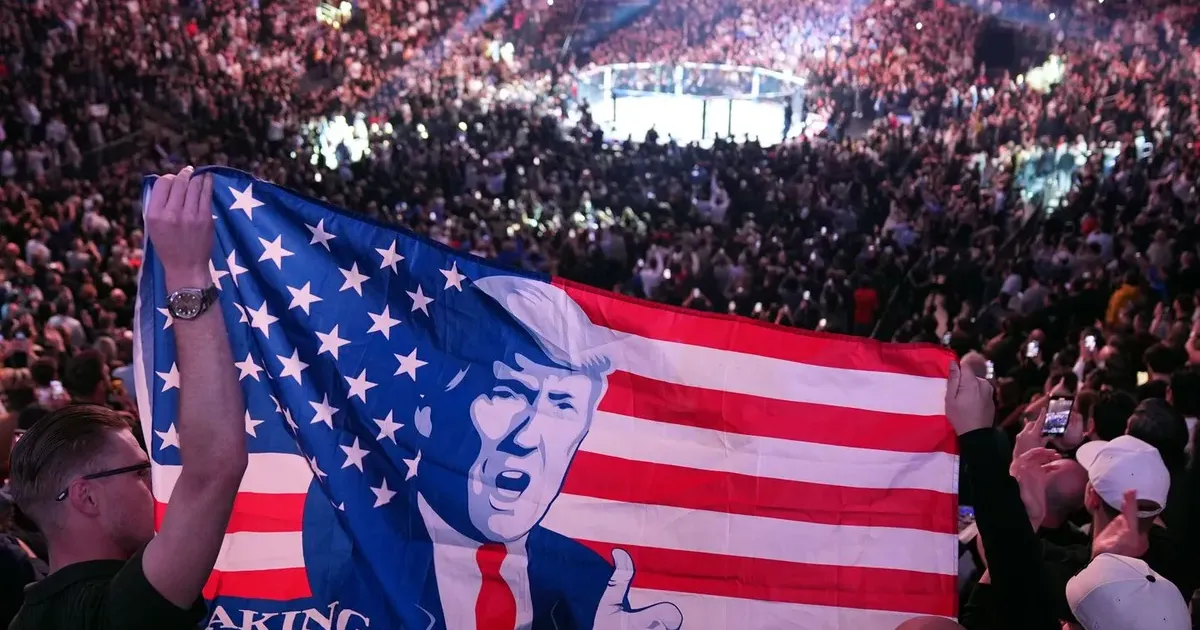
Donald Trump turned his 80th birthday into a UFC spectacle on the White House South Lawn, placing combat sports inside the symbolic center of American power. The June 14, 2026 event was not just a birthday party. It was a political image built from the Octagon, patriotic staging, celebrity attendance and Trump's long alliance with Dana White.
The setting did most of the work. A cage on the South Lawn sent a sharper message than a formal dinner ever could. It tied Trump's presidency to the visual language of combat: entrances, winners, losers, roaring crowds and controlled confrontation.
South Lawn Becomes a Fight Venue
The event, branded around the UFC and the country's 250th anniversary cycle, required the White House grounds to function as a temporary arena. Reports described thousands of guests, a tightly managed security environment and a production designed to travel across sports, political and entertainment feeds at once.
That kind of staging was not accidental. Trump has used sports culture for years as a shortcut to identity politics, especially through UFC audiences that value toughness, grievance, celebrity and anti-establishment branding. The White House event took that relationship and moved it from cageside applause to presidential architecture.
Dana White's presence gave the night its most obvious through line. The UFC chief has been one of Trump's most visible sports-world allies, and the promotion's rise from marginal combat brand to White House lawn spectacle gave both men a victory image. For White, the event underlined UFC's mainstream power. For Trump, it turned an official residence into a personal arena.
Birthday Party or Political Product
Supporters could frame the night as patriotic entertainment and a break from stale ceremony. That is part of its appeal. The presidency has always borrowed from sports, whether through championship visits, ceremonial first pitches or Super Bowl calls. Trump simply chose a more aggressive form.
The difference is that this event did not merely host athletes after their achievement. It made the White House itself part of the show. The South Lawn was not a backdrop for honoring someone else's title. It became the venue where the president's preferred culture performed for his guests and his media ecosystem.
That shift matters because the White House is not only a residence. It is a civic symbol, a diplomatic stage and a public institution. Every use of its grounds carries a message about what the office is for. A UFC cage sends a different message from a state dinner, a military ceremony or a youth sports day.
Security Made the Spectacle Possible
The event's anti-establishment feel depended on establishment machinery. Federal security, access control, medical planning, broadcast logistics and athletic regulation had to work for the night to appear effortless. The cage may have represented raw confrontation, but the production was possible only because the state controlled every entrance, screen and perimeter.
That contradiction is central to Trump's political style. He often presents institutional power as if it were insurgent performance. The South Lawn UFC event followed the same script: the highest office in the country dressed itself in the costume of outsider aggression.
There is no need to pretend mixed martial arts is not a legitimate sport. It is. The issue is not the fighters. The issue is the presidency's choice of metaphor. A combat-sports birthday event at the White House tells the public that politics is not only argument or governance, but dominance staged for cameras.
Power Spectacle Verdict
The UFC event worked because it was impossible to ignore. That is also the problem. It converted the White House into content and treated the presidency as a promotional platform shaped around one man's appetite for spectacle.
Trump's supporters will remember the night as confident and patriotic. His critics will remember it as another erosion of institutional restraint. Both readings begin with the same image: an Octagon on the South Lawn, proving that in Trump's Washington, even the people's house can be turned into a fight card.