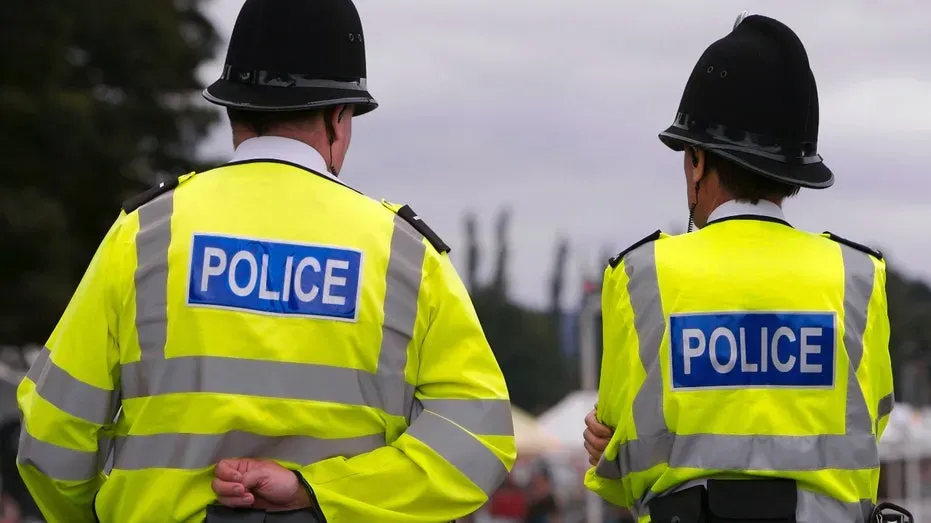
The Home Office decision to scrap broad non-crime hate incident recording in England and Wales is not a small administrative tidy-up. It is an attempt to redraw a line that policing had blurred for years: when should the state record hostile conduct that is not criminal, and when does that recording become speech policing?
Ministers say officers should no longer be pulled into everyday rows, playground insults or online spats where no offence has been committed. The reform does not legalize threats, harassment, stalking or abuse that already crosses a criminal threshold. It changes how police handle conduct that is offensive, prejudiced or unpleasant but still lawful.
The Old System Had a Real Origin
Non-crime hate incident recording grew out of the post-Stephen Lawrence policing settlement, when forces were pushed to take racist and hostile incidents more seriously even if a case could not immediately be charged. The purpose was to notice patterns, support victims and identify community tension before it became worse.
The history matters because some campaigners hear abolition language as abandonment. For disabled people, racial minorities, religious communities and LGBT people, repeated lower-level hostility can be part of a wider pattern. A single insult may not justify a police record. Repeated intimidation outside a home, school or workplace may tell a different story.
The reform is strongest when it admits that tension instead of pretending the old system was only absurd. It was created in response to real policing failures. It also grew beyond a defensible boundary.
The Free-Speech Objection Was Not Imaginary
The backlash against NCHIs had substance. People could be recorded after lawful speech, social media arguments or personal disputes. Critics argued that police databases should not hold personal data about citizens who had not committed crimes, especially where records might later affect enhanced background checks, employment or professional standing.
The Home Office pointed to unclear guidance, inconsistent force practice, digital-age disputes and officers being drawn into incidents that were better handled outside policing. The College of Policing and NPCC review also pushed toward clearer incident recording and stronger tests for when personal data should be retained.
The free-speech critique cannot be dismissed as culture-war noise. If police are seen as moderators of national offence, trust in core policing suffers. Citizens need to know that lawful speech is not casually converted into a file.
NSIRA Has to Carry the Detail
The practical replacement work sits around the National Standard for Incident Recording and Assessment. The key question is not whether forces use the old NCHI label. It is whether officers receive a clear standard for triaging reports, recording non-crime matters only where there is a genuine policing purpose, and signposting people elsewhere when police involvement is not appropriate.
Slogans fail at that point. A heated online argument should not become a police record because someone disliked it. A credible pattern of targeted intimidation may still need a safeguarding route, community-support referral or antisocial-behaviour response before it turns into a prosecutable offence.
The distinction is hard, but that is exactly why the guidance must be concrete. Officers need examples, not just political language about common sense.
Police Time Is Part of the Argument
The policy lands inside a wider crisis of police capacity. Forces face public pressure over burglary, shoplifting, domestic abuse, violence, antisocial behaviour and visible neighborhood policing. When officers are called to assess lawful speech disputes, many people see priorities being distorted.
The capacity concern does not prove every non-crime record was useless. It does mean the old system had to justify itself against visible crime demand. The Home Office is betting that narrowing police involvement will restore confidence and free time for conduct that clearly belongs in criminal justice.
The policy bet will fail if genuine threats and harassment are missed. A reform sold as focus cannot become a reason for forces to ignore early warning signs.
Vulnerable Groups Need More Than Reassurance
Campaigners warning about disabled victims and other targeted groups are not simply defending bureaucracy. They are pointing to a real gap between the first hostile act and the moment a case becomes easy to prosecute. Repeated neighbor abuse, targeted verbal intimidation and hostile local patterns can damage lives long before a chargeable offence appears.
The answer is not blanket recording of lawful speech. It is also not indifference. Forces need routes for safeguarding referrals, victim support, community tension monitoring and non-police partner response where a criminal investigation is not justified.
If the new system only says no, vulnerable people will hear withdrawal rather than balance. If it records too broadly, citizens will see the old problem under a new name.
The Data Question Cannot Be an Afterthought
The reform also needs a route for people to challenge records that should not exist. Data retention, disclosure in enhanced checks and deletion processes are not technical side issues. They are the civil-liberties core of the dispute.
For the policy to hold, police forces need consistent rules across England and Wales. A lawful comment should not be recorded in one force area and ignored in another. A credible risk pattern should not disappear because a local force is nervous about the politics of NCHI reform.
The policy will succeed only if the new boundary can be understood by officers, trusted by citizens and believed by communities most likely to face targeted hostility. Police should not build files on lawful arguments because they are offensive. They also should not wait for preventable harm to become easy to prosecute. England and Wales are trying to move back toward the criminal threshold without losing all early-warning value. That is a defensible aim only if the new line is clear enough to survive real cases.