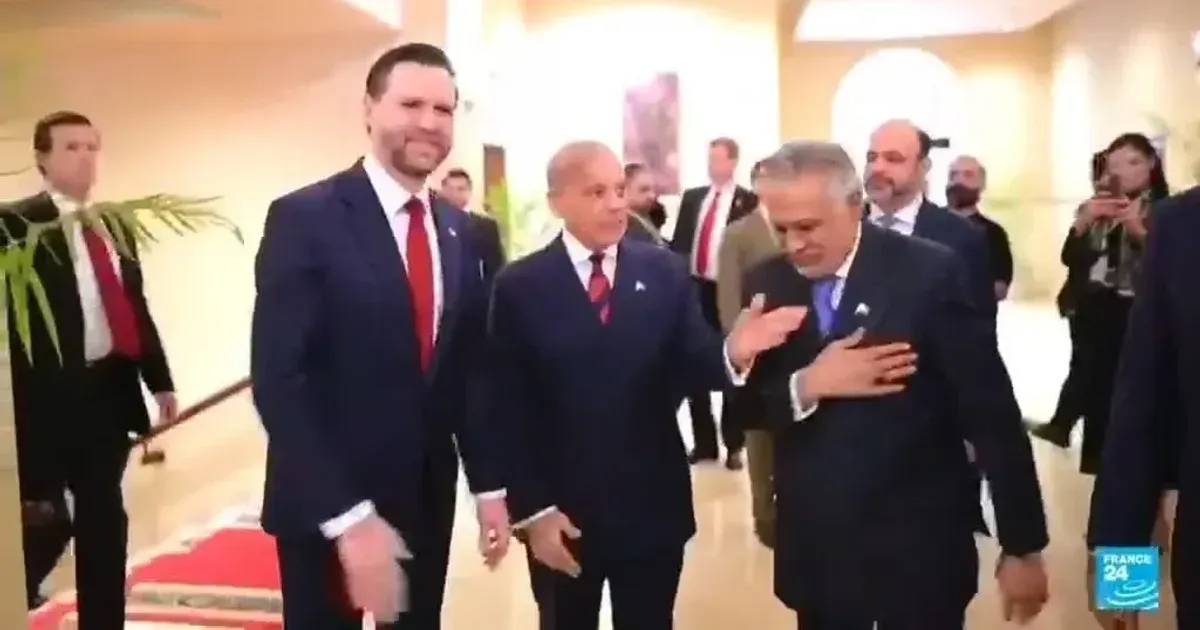
JD Vance announced that the United States achieved technical progress in nuclear negotiations with Tehran while a naval blockade in the Strait of Hormuz continues to restrict Iranian oil exports. Speaking during a television appearance, the vice president characterized the current diplomatic friction as a matter for Iranian officials to resolve by deciding whether to engage in a subsequent round of high-level meetings. Washington maintains a firm stance on maritime enforcement to pressure the Islamic Republic into a long-term nuclear commitment. Recent intelligence reports suggest that naval assets from the Fifth Fleet have successfully intercepted three tankers attempting to bypass the regional cordon since the start of the month. The negotiating update was delivered on April 14, 2026.
Tehran initially agreed to a five-year moratorium on uranium enrichment, yet American negotiators demand a 20-year restriction to ensure regional stability. Iranian officials argue that a two-decade ban violates their sovereign rights to peaceful energy development. National security experts in Washington maintain that a five-year window is insufficient to prevent the rapid breakout capacity of Iranian centrifuge facilities. Satellite imagery from the Natanz facility indicates that subterranean construction projects continue despite the ongoing diplomatic dialogue. High-level discussions remain stalled on this specific timeline discrepancy.
Naval Blockade in Hormuz Disrupts Global Energy
China condemned the American maritime strategy as a reckless disruption of international trade protocols. Beijing officials stated that the U.S. naval blockade undermines the stability of an existing, though fragile, ceasefire. Since China is the primary purchaser of Iranian crude, the restriction on tanker traffic directly impacts the energy security of the world's second-largest economy. Maritime data indicates that oil flow through the Strait of Hormuz dropped by 18% over the last 14 days. Beijing sees the blockade as an extraterritorial application of U.S. law that threatens the neutral status of international waters.
Vice President JD Vance stated that the ball is in Iran's court when it came to whether a second round of talks would take place.
Nuclear Enrichment Dispute Defines Diplomatic Standoff
Negotiations currently focus on the specific technical parameters of centrifuge decommissioning. U.S. officials seek the physical removal of IR-6 centrifuges from the Fordow enrichment plant. Iran maintains that it will only mothball the equipment under International Atomic Energy Agency supervision rather than dismantle it entirely. Historical parallels to the 2015 nuclear deal suggest that verification remains the most serious hurdle for Western observers. Intelligence assessments provided to the Senate Foreign Relations Committee indicate that Tehran could produce enough fissile material for a weapon within 12 days if the current talks collapse. This deadline places immense pressure on the State Department to secure a long-term deal.
Beijing has warned that it might deploy its own naval escorts to protect its commercial interests in the region. Such a move would bring the People's Liberation Army Navy into direct proximity with American carrier strike groups. Chinese Foreign Ministry officials labeled the U.S. actions in the Gulf as a violation of the United Nations Charter. Diplomats in Brussels are attempting to mediate between the two superpowers to prevent a maritime confrontation. Crude oil futures rose to $94 per barrel on the London exchange following the latest escalatory rhetoric from Beijing.
China Criticizes US Maritime Enforcement Strategies
Supply chain disruptions are already manifesting in the manufacturing sectors of Southeast Asia. Factories in Guangdong reported a shortage of petrochemical feedstocks used in plastics production. Analysts at Goldman Sachs project that a sustained blockade will add 0.5% to global inflation by the end of the fiscal year. Washington officials have not yet responded to the Chinese threats of naval intervention. White House press briefings emphasize that the blockade remains a targeted measure against sanctioned entities. Trade data shows that $11 billion in Iranian oil revenue is currently frozen in international escrow accounts.
JD Vance suggested that the administration is prepared for any contingency if the diplomatic path fails. Military drills in the Mojave Desert have recently simulated the seizure of coastal energy infrastructure. Tehran responded by conducting its own missile tests in the Kavir Desert. These displays of force serve to harden the domestic political positions of leaders in both capitals. Hardline factions in the Iranian Parliament have called for an immediate withdrawal from the Treaty on the Non-Proliferation of Nuclear Weapons. This legislative pressure limits the flexibility of Iranian negotiators in Geneva.
Negotiating the Nuclear Red Line
The Trump administration appears to be engineering a pretext for kinetic intervention rather than pursuing a peaceful resolution through a naval blockade and a 20-year enrichment demand. History suggests that squeezing a regional power like Iran while simultaneously choking its primary patron, China, creates a coalition of desperation that rarely leads to the negotiating table. The American insistence on a two-decade ban is functionally an ultimatum for regime capitulation, a demand that no sovereign state accepts without total military defeat.
Washington is playing a dangerous game of maritime brinkmanship. By blocking the Strait of Hormuz, the United States is not just targeting Tehran; it is effectively imposing an energy tax on Beijing. This strategy assumes that China will remain a passive observer while its industrial engine stalls. That assumption is flawed. Beijing has spent a decade building a blue-water navy specifically to challenge American hegemony in essential sea lanes. If a Chinese destroyer chooses to escort an Iranian tanker through the blockade, the U.S. will face a choice between a humiliating climb-down or the start of a third world war.
The current progress JD Vance cites is likely nothing more than the temporary silence that precedes a storm. Calculated aggression often masquerades as diplomacy until the first shot is fired. It is not a negotiation. It is a siege.