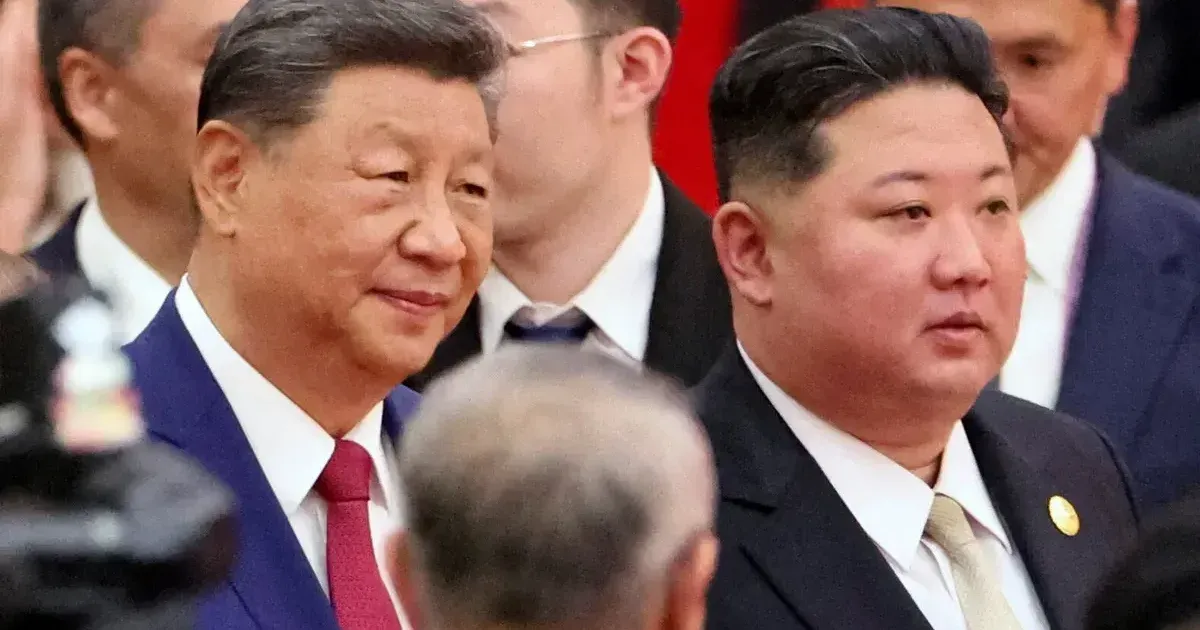
Chinese President Xi Jinping arrived in Pyongyang on Monday for high-stakes talks with Kim Jong-un, signaling a renewed effort to stabilize the Korean Peninsula. The visit gives both leaders a chance to display alliance strength after years of border disruption. A lavish reception marked the start of the visit, representing the first state visit by a Chinese leader to the country in nearly seven years. The trip began on June 8, 2026, after a long diplomatic gap between the two capitals. Beijing had not dispatched its head of state to the North Korean capital since 2019, creating a visible diplomatic void that other global powers have attempted to fill. This strategic outreach occurs as the two nations navigate a complex recovery from pandemic-era isolation.
Beijing remains the primary economic lifeline for Kim's administration.
Relations between the two neighbors suffered during the COVID-19 pandemic, when North Korea implemented a total border shutdown that lasted nearly three years. Trade volumes between the allies plummeted by over 90% during the peak of the freeze, leaving the North Korean economy in a state of severe stagnation. Xi's presence in the capital suggests a formal end to this period of tactical distancing. Officials from both delegations are expected to finalize agreements on food security, fuel shipments, and infrastructure development along the Yalu River border crossings.
Countering Russian Influence in Pyongyang
Russia's deepening military and diplomatic partnership with North Korea has prompted concern in Beijing over its own standing with its junior ally. Pyongyang has reportedly provided meaningful munitions support to Moscow for use in Ukraine, receiving advanced satellite technology and energy concessions in return. China, which holds the only formal defense treaty with North Korea, views this growing Moscow-Pyongyang axis with caution. Diplomacy between Xi and Kim will likely focus on reaffirming the 1961 Treaty of Friendship, Cooperation, and Mutual Assistance, which binds the two nations in a mutual defense pact.
"Beijing is trying to reassert influence over a strategically essential yet deeply unpredictable partner," according to a report by the BBC.
Security coordination is another critical foundation of the visit.
Analysts suggest that Beijing prefers a predictable status quo rather than a North Korea that feels emboldened by Russian military backing to escalate tensions with South Korea and the United States. While Beijing has historically shielded Pyongyang from the harshest United Nations sanctions, it has also expressed frustration when North Korean missile testing cycles draw increased U.S. military assets into the region. Xi likely intends to secure a commitment from Kim to prioritize economic revitalization over immediate nuclear provocations. Such a shift would allow China to manage its competition with Washington without the constant threat of a regional conflict triggered by North Korean maneuvers.
Economic Recovery and Border Security Protocols
Trade flows have begun a slow resumption, but the return of regular cargo rail traffic between Dandong and Sinuiju is a top priority for this delegation. North Korea requires large infusions of fertilizer and heavy machinery to address its chronic agricultural shortfalls. Chinese state-owned enterprises are reportedly prepared to restart several stalled mineral extraction projects that provide the Kim regime with needed hard currency. These economic incentives give Xi considerable leverage as he seeks to reassert Chinese dominance over the North's foreign policy direction.
Recent satellite imagery indicates that North Korea has been upgrading its border security infrastructure, including new fencing and electronic surveillance systems provided by Chinese firms. This technology helps the regime maintain internal control while allowing for the controlled flow of essential goods. Cooperation on cyber security and intelligence sharing is also on the agenda, as both nations face increasing pressure from the trilateral alliance of the U.S., Japan and South Korea. By strengthening these institutional ties, Xi ensures that Pyongyang cannot fully pivot its dependency toward Moscow.
Beijing's diplomats have consistently argued for a dual-track approach to the peninsula, advocating for denuclearization alongside a formal peace treaty. Xi's current visit reinforces the idea that any lasting solution to the Korean security dilemma must pass through the Chinese capital. The visit reestablishes the traditional hierarchy of the relationship, placing China back at the center of North Korean strategic planning. Final communiques from the two-day trip are expected to emphasize the unbreakable bond between the two socialist states.
Xi Balances Kim's Stability Against Russian Influence
How far Beijing is willing to underwrite North Korea's military expansion remains a central calculation for regional security analysts. If Xi provides too much economic support without demanding restraint, he risks validating Kim Jong-un's aggressive stance against Seoul. By contrast, if he pushes too hard for concessions, he may drive Pyongyang further into the arms of Vladimir Putin. The goal for this trip is the restoration of a delicate equilibrium where North Korea remains stable enough to serve as a buffer zone but not so volatile that it invites a larger Western military presence to China's doorstep.
Success for Xi is measured not in breakthroughs, but in the resumption of a predictable, Beijing-centric order. The visit asserts that while other players may offer temporary gifts, China provides the permanent structural foundation for the North's survival.