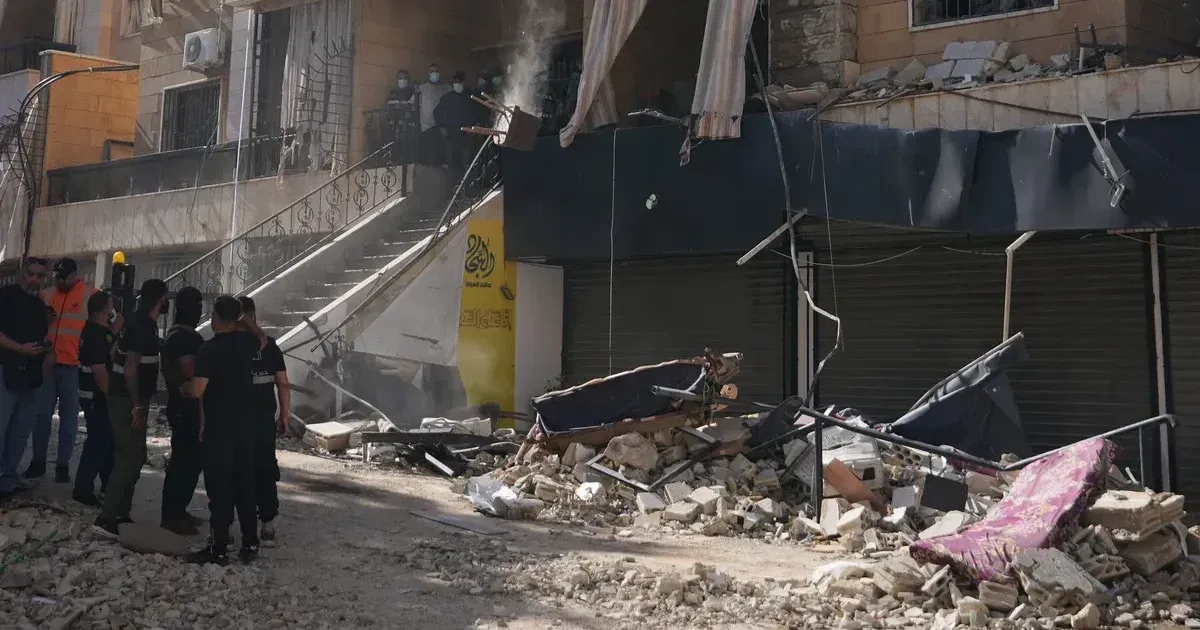
Israeli fighter jets targeted the southern outskirts of Beirut after a breakdown in high-level ceasefire negotiations. The Beirut strike shows how quickly a failed truce channel can return the conflict to direct military pressure. The military operations followed a series of projectiles launched from Lebanese territory into northern Israel earlier in the day. The renewed escalation began on June 7, 2026, after a brief period of relative calm in the Lebanese capital.
Military officials in Tel Aviv confirmed that the strikes hit specific infrastructure belonging to Hezbollah. Command centers and logistics hubs were the primary focus of the aerial campaign, according to defense statements. Israeli surveillance drones had been monitoring these locations for several weeks prior to the decision to engage.
Trump administration diplomats had attempted to broker a cessation of hostilities by hosting Israeli and Lebanese officials in Washington. Recent sessions at the State Department aimed to establish a buffer zone and a timeline for the withdrawal of armed groups from the border. Despite the presence of senior mediators, the Iran-backed militant group dismissed the proposed terms of the truce late Saturday night. Negotiators had hoped that direct involvement from the White House would provide enough leverage to secure a lasting agreement.
Diplomatic efforts in the American capital now face a meaningful deadlock. Lebanese representatives at the talks signaled a willingness to explore de-escalation, yet they admitted their influence over Hezbollah military decisions is limited. Reports from the 10th floor of the State Department indicate that the proposed framework included enhanced monitoring of the Blue Line. Without the consent of the primary combatant on the Lebanese side, the diplomatic architecture failed to hold.
Breakdown of the Washington Summit
Israeli officials moved to increase military pressure almost immediately after the rejection of the peace plan. Envoys from the Trump administration had presented a multi-stage plan that prioritized the return of displaced civilians to northern Israel. The refusal by Hezbollah leaders to accept these conditions led to an immediate shift in the Israeli security cabinet. The prime minister's office staff noted that the window for a negotiated settlement was closing rapidly given the continued rocket fire.
Skepticism regarding the effectiveness of these talks has grown among regional analysts. Imad Harb, a political analyst, argued that the structural problems within the Lebanese state make such negotiations inherently difficult. He noted that the lack of internal cohesion in Beirut prevents the central government from enforcing any international agreement on non-state actors. Many in the region now view the Washington summit as a procedural exercise rather than a functional path to peace.
"It is hard to assume that anything positive for Lebanon can come from its talks with Israel," stated analyst Imad Harb during a recent assessment of the diplomatic crisis.
Earlier strikes on infrastructure marked the first major bombardment of the city since the previous ceasefire attempt. DW News reported that the Israeli military specifically sought to degrade Hezbollah command-and-control capabilities to prevent further projectile launches. Residents in the Dahiyeh district reported seeing plumes of smoke rising from residential areas that are known strongholds for the militant group. Initial damage assessments show serious destruction to several buildings used for tactical coordination.
Military Objectives and Iranian Influence
Tehran maintains its support for Hezbollah, providing the group with the technical means to sustain its resistance against Israeli incursions. Defense analysts suggest that the recent projectiles used in the morning attack were more sophisticated than those seen in previous months. These weapons likely traveled deep into Israeli territory before being intercepted by the Iron Dome system. The persistence of these shipments from Iran remains a central point of contention for Israeli planners who see no alternative to direct kinetic action.
Security officials in Tel Aviv emphasized that the strikes were a direct response to provocations. Intelligence suggests that Hezbollah had been using the pause in fighting to reposition equipment closer to the urban center. By hitting these targets now, Israel aims to disrupt the militant group's ability to launch a coordinated ground offensive. The military has stated it will continue to strike any assets that pose an immediate threat to its northern border communities.
Lebanon's sovereign interests are increasingly caught between the demands of the international community and the actions of Hezbollah. Local officials in Beirut expressed concern that the resumed bombing would derail any remaining hope for economic recovery. The tourism sector, which had seen a slight uptick during the brief lull, has again come to a standstill. Large-scale displacement continues as families flee the southern suburbs in search of safety in the mountains or northern provinces.
Failed Talks Push Lebanon Back Toward Wider War
Conflict expansion in the Levant forces a difficult recalculation for Western powers who have invested heavily in Lebanese stability. The failure of the Washington summit illustrates the limitations of traditional diplomacy when non-state actors hold the balance of power. If the Trump administration cannot secure a breakthrough soon, the risk of a wider regional war involving multiple Iranian proxies becomes more likely. This situation places an immense burden on the Lebanese Armed Forces, which are tasked with maintaining order while lacking the resources to challenge Hezbollah's military autonomy.
Market stability in the Eastern Mediterranean also hangs in the balance as energy exploration projects near the maritime border face new delays. Investors are retreating from the region until a more permanent security arrangement is visible. The immediate priority for the White House will be to prevent a total collapse of the negotiation channel, even as the military situation on the ground dictates a different reality. Future talks will likely require a new set of incentives or a meaningful shift in the military balance before Hezbollah reconsiders its rejection of the truce.