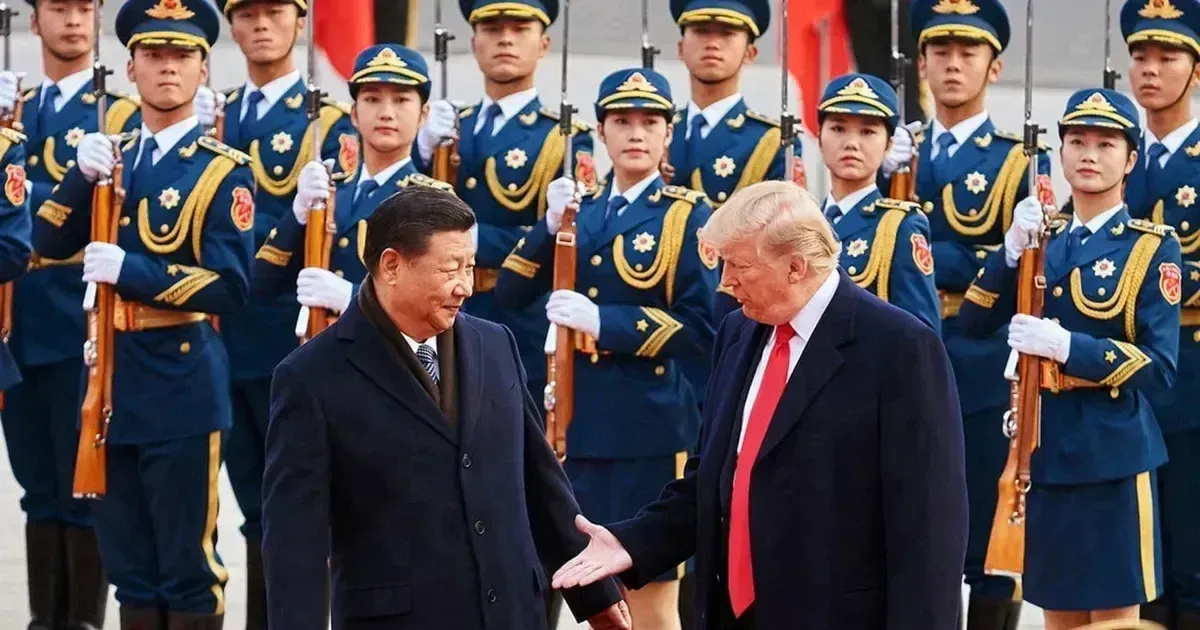
Donald Trump arrived in Beijing on Wednesday night to face Chinese leader Xi Jinping during a period of extreme global volatility. The ceremony was designed to show stability before the leaders moved into harder questions over trade, energy and security. The welcome ceremony was only the opening act for a much more difficult policy conversation. Negotiations on May 14, 2026, mark a critical attempt to stabilize a relationship strained by trade disputes and a spreading conflict in the Middle East. Both presidents prepared for their first face-to-face encounter of this trip, which began with an elaborate welcome ceremony designed to project mutual respect. Beijing provided a red-carpet reception at the Great Hall of the People, emphasizing the importance of this bilateral exchange during a time of international fracturing. Trump and Xi seek to prove that their respective nations can maintain a level of predictability despite escalating rivalries in technology and regional security. Washington officials hope this meeting establishes a floor for a relationship that has frequently teetered toward open confrontation over the last several months.
Economic pressure looms over the diplomatic pageantry as trade between the two largest economies continues to suffer. Data shows that while China exports have hit record highs, American trade interests have not seen reciprocal growth since Trump took office. Al Jazeera analysts suggest the American president is desperate for a real victory to show voters back home. Beijing remains the primary destination for American agricultural and high-tech goods, yet barriers to entry persist. Both sides have traded accusations of unfair market practices for years, leading to a complex web of tariffs that currently hampers global manufacturing.
Xi Jinping has consistently called for a more equitable trade framework, yet the reality on the ground reflects a deep protectionism that neither side seems ready to fully abandon. Negotiators scheduled several hours of closed-door sessions to address these persistent imbalances.
Red Carpet Diplomacy and the Trade Deficit
Official ceremonies in the heart of the Chinese capital were a backdrop for what experts call transactional diplomacy. CBS News reporter Weijia Jiang noted that the two-day visit is meant to signal stability to the world, showing that the competition between the U.S. and China is not escalating into confrontation. Trump appeared alongside Xi during the high-profile arrival events, where military honor guards and cheering schoolchildren lined the square. This display of soft power contrasts sharply with the hardened rhetoric typically heard from both capitals regarding semiconductor restrictions and maritime rights.
Symbols of cooperation were plentiful during the morning sessions, but the underlying tensions regarding trade deficits and market access lingered. China's industrial output continues to outpace expectations, creating a surplus that American negotiators find increasingly difficult to manage without further legislative action in Washington.
"The two-day visit is meant to signal stability to the world, showing that the competition between the U.S. and China is not escalating into confrontation," according to Weijia Jiang of CBS News.
Trade imbalances are a recurring theme in every high-level meeting between these two powers. Trump has frequently criticized the lack of reciprocity in market access, arguing that American firms face hurdles that Chinese companies do not encounter in the United States. Xi, by contrast, maintains that American export controls on sensitive technology are the true barrier to balanced trade. This stalemate has forced many multinational corporations to diversify their supply chains, a process often referred to as de-risking. Industrial leaders in both nations are watching these talks closely for any sign of tariff relief or regulatory easing. Negotiations over Taiwan and regional security remain central to the ongoing bilateral summit.
Small concessions on agricultural purchases or energy contracts could provide the win that Trump seeks, but structural changes to the Chinese economy are unlikely to emerge from a single summit. Beijing views its current economic model as essential to national security and social stability.
Energy Markets and the US-Iran Conflict
Energy security has become a central foundation of the summit because of the ongoing US-Iran war. South China Morning Post reports indicate the conflict has disrupted global energy supplies and fueled economic uncertainty across Asia and the West. Beijing relies heavily on imported crude, much of it originating from the Middle East, making any disruption in the Strait of Hormuz a direct threat to Chinese economic growth. Trump needs Chinese cooperation to enforce sanctions or at least limit the financial lifeline provided to Tehran through illicit oil sales.
Both leaders understand that a total collapse of energy markets would trigger a global recession, an outcome that neither government can afford. Xi Jinping has maintained a delicate balancing act, criticizing American military intervention while simultaneously ensuring that Chinese refineries have access to stable fuel sources. The war has added fresh strain to Washington-Beijing ties as each side blames the other for the lack of a diplomatic resolution.
Regional stability depends on how these two powers manage their respective interests in the Persian Gulf. Washington views Chinese influence in Iran as a hurdle to its military objectives, while Beijing sees American aggression as a destabilizing force in a region critical to its Belt and Road Initiative. Discussions on May 14, 2026, were expected to cover potential de-escalation strategies that involve Chinese diplomatic mediation. If Beijing can leverage its relationship with Tehran to limit the scope of the war, it would sharply enhance its status as a global peacemaker.
Trump, however, appears more focused on immediate tactical gains and energy price stabilization. Global oil prices have fluctuated wildly since the start of the conflict, putting immense pressure on consumer prices in the United States. Beijing's strategic reserves are among the largest in the world, giving Xi real leverage in any discussion about global energy price caps or emergency supply releases.
Taiwan and Regional Security Frameworks
Geopolitical friction points beyond the Middle East dominated the later portions of the summit agenda. Yonhap News confirmed that Taiwan remains a core issue for both administrations, with Beijing reiterating its red lines regarding island sovereignty. Trump has balanced traditional American support for Taipei with a desire to maintain a functional relationship with Xi Jinping. Military activity in the South China Sea has increased over the last year, leading to several close encounters between naval vessels.
Stability in the Taiwan Strait is essential for the global semiconductor industry, as any conflict there would halt the production of the world's most advanced chips. Xi Jinping likely used the summit to warn against further American arms sales to the island. Trump is looking for a way to manage these tensions without appearing weak to his domestic political base, which remains highly skeptical of Chinese intentions.
Security frameworks in the Indo-Pacific are undergoing a rapid transformation as alliances shift in response to the growing Chinese military presence. Beijing views American partnerships with Japan, Australia, and the Philippines as a containment strategy. Trump has often questioned the cost of these alliances, suggesting that partners should pay more for American protection. The rhetoric creates an opening for Chinese diplomats to offer alternative security arrangements that emphasize regional autonomy. Both leaders must navigate these competing visions for the future of Asia without triggering an accidental conflict.
The summit is a pressure-release valve, allowing both sides to air grievances in a controlled environment. While no major breakthrough on the status of Taiwan was expected, the mere fact that both presidents are talking face-to-face provides a temporary reprieve from the constant threat of escalation.
Transactional Gains Cannot Erase the US-China Rivalry
Could the transactional nature of this summit actually provide more stability than traditional diplomacy? By focusing on concrete wins like energy contracts and specific trade targets, Trump and Xi are bypassing the ideological battles that usually stall progress. The approach treats the US-China relationship like a high-stakes corporate negotiation rather than a clash of civilizations. Beijing seems willing to play this game, offering the red-carpet treatment and symbolic gestures to satisfy the American need for public victory. Underneath the pageantry, the fundamental rivalry remains unchanged, particularly in high technology and military dominance.
The true test will be whether these small, transactional gains can survive the next major crisis in the Middle East or the Taiwan Strait. If the Iran war intensifies, the fragile stability established in Beijing will be the first thing to shatter. Power remains the only currency that both leaders truly respect.